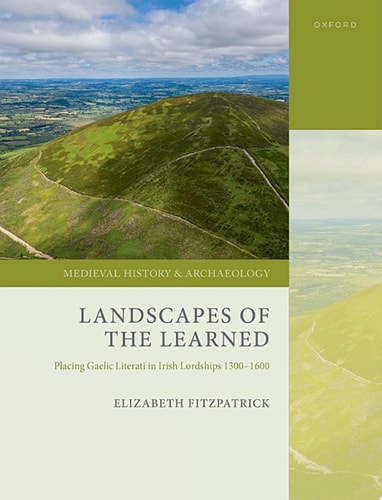
Landscapes of the Learned: Placing Gaelic Literati in Irish Lordships 1300-1600
0
0
As an Amazon Associate and affiliate partner, Menrva Books earns from qualifying purchases. Learn more
Author Description
Gaelic literati were an elite and influential group in the social hierarchy of Irish lordships between c. 1300 and 1600. From their estates, they served Gaelic and Old English ruling families in the arts of history, law, medicine, and poetry. They farmed, kept guest-houses, conducted schools, and maintained networks of learning. In other capacities, they were involved in political assemblies and memorializing dynastic histories in landscape. This book presents a framework for identifying and interpreting the settings and built heritages of their estates in lordship borderscapes. It shows that a more textured definition of what this learned class represented can be achieved through the material record of the buildings and monuments they used, and where their lands were positioned in the political map. Where literati lived and worked are conceived as expressions of their intellectual and political cultures. Mediated by case studies of the landscapes of their estates, dwellings, and schools, the methodology is predominantly field based, using archaeological investigation and topographic and spatial analyses, and drawing on historical and literary texts, place-names and lore in referencing named people to places. More widely, the study contributes a landscape perspective to the growing body of work on autochthonous intellectual culture and the exercise of power by ruling families in late medieval and early modern northern European societies.
Menrva's Summary
THE THESIS
This book investigates how the physical settings and built heritage of Gaelic literati estates reflect their intellectual and political roles within Irish lordships from 1300 to 1600. Elizabeth M. Fitzpatrick, an expert in Irish medieval archaeology, utilizes a multidisciplinary framework to connect the material record of buildings and monuments to the social status of these learned families. By analyzing the spatial positioning of their lands, the author argues that the physical environment served as a deliberate expression of the literati's cultural influence and their integration into the power structures of ruling families.
THE SCOPE MAP
What You Will Find
- Analysis of Gaelic literati estates, dwellings, and schools in late medieval and early modern Ireland.
- Methodologies for interpreting landscape archaeology, including topographic and spatial analysis.
- Integration of historical texts, place-names, and local lore with physical site data.
- Comparative insights into autochthonous intellectual culture in northern European societies.
Scope Limits
- The study focuses specifically on the material and spatial record of the literati rather than a comprehensive biographical history of individual scholars.
- The analysis is bounded by the period of 1300 to 1600 and the specific context of Irish lordships.
THE AUTHORITY PERSPECTIVE
Scholars and archaeologists recognize this work as a significant contribution to the study of medieval Irish social structures through the lens of landscape archaeology. Readers frequently note the academic density of the prose and the rigorous methodology employed to bridge the gap between literary history and physical site investigation.
Page Count:
373
Publication Date:
2023-01-01
Publisher:
OUP Oxford
ISBN-10:
0192668285
ISBN-13:
9780192668288
History
Irish History
European History
Great Britain
Cultural History
Archaeology
Middle Ages
Community Tags
Similar Books