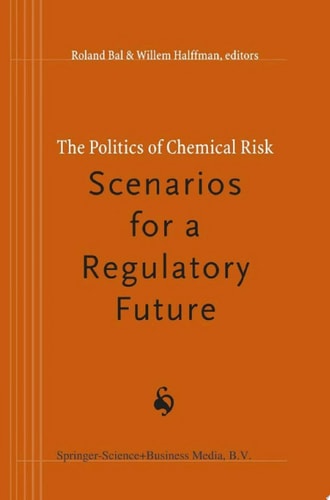
The Politics of Chemical Risk: Scenarios for a Regulatory Future
0
0
As an Amazon Associate and affiliate partner, Menrva Books earns from qualifying purchases. Learn more
Author Description
All industrial countries have developed regulatory systems to assess and manage the risk of chemical substances to the working and natural environment. The pressure to harmonize these often specialized regulatory systems is increasingly strong at the international level. Such harmonization not only entails the assessment of particular chemicals, but also the way assessment procedures and their boundary with risk management is organized. As these initiatives intensify, they increasingly raise important questions of how to integrate national differences in the international regulatory arena. How will national consultation procedures relate to international decision-making on chemical risks? How will differences in national risk assessment procedures be accommodated? How will the international regulatory system be integrated with different national styles of regulation and government? Presenting the experiences and insights of both people from within the worlds of risk assessment and management and from the field of Science Studies, this book forms a state-of-the-art in the discussion on the Politics of Chemical Risk. By offering scenarios, or sketches of a regulatory future, it points to the choices that can be made and the opportunities to be explored. As such, it offers an agenda for environmental and occupational scientists, policy-makers and students of science and technology alike.
Menrva's Summary
THE THESIS
This book investigates the complex challenges and future possibilities of harmonizing international regulatory systems for chemical risk assessment and management. It addresses how national differences in consultation procedures, risk assessment methodologies, and regulatory styles can be integrated into a global framework, drawing on the expertise of risk professionals and Science Studies scholars. The authors present scenarios for a future regulatory landscape, offering insights into the choices and opportunities available for environmental and occupational scientists, policymakers, and students.
THE SCOPE MAP
- Analysis of existing national regulatory systems for chemical risk assessment and management in industrial countries.
- Exploration of the pressures and challenges of international harmonization of these regulatory systems.
- Discussion on the integration of national consultation procedures with international decision-making on chemical risks.
- Examination of how differences in national risk assessment procedures can be accommodated in international contexts.
- Investigation into the integration of international regulatory systems with diverse national styles of regulation and government.
- Presentation of scenarios and sketches for potential future regulatory frameworks.
- Insights from both risk assessment/management practitioners and Science Studies scholars.
- An agenda for environmental and occupational scientists, policymakers, and students of science and technology.
THE AUTHORITY PERSPECTIVE
This book is positioned as a state-of-the-art discussion on the politics of chemical risk, aimed at a diverse audience including scientists, policymakers, and students. The inclusion of perspectives from both practitioners and academics suggests a balanced approach to complex regulatory issues. By offering scenarios for the future, the book aims to stimulate debate and guide future policy development in chemical risk management.
Page Count:
368
Publication Date:
2013-04-17
Publisher:
Springer Science & Business Media
ISBN-10:
9401591016
ISBN-13:
9789401591010
Science & Technology
Politics
Non-Fiction
Regulatory Affairs
Community Tags
Similar Books