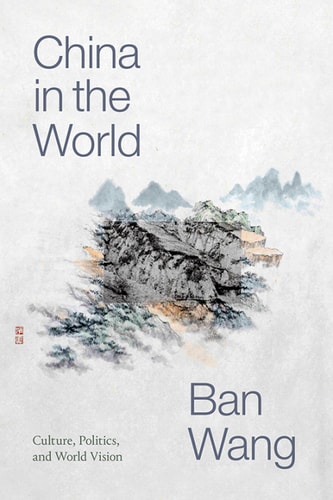
China in the World
0
0
As an Amazon Associate and affiliate partner, Menrva Books earns from qualifying purchases. Learn more
Author Description
In China in the World, Ban Wang traces the evolution of modern China from the late nineteenth century to the present. With a focus on tensions and connections between national formation and international outlooks, Wang shows how ancient visions persist even as China has adopted and revised the Western nation-state form. The concept of tianxia, meaning “all under heaven,” has constantly been updated into modern outlooks that value unity, equality, and reciprocity as key to overcoming interstate conflict, social fragmentation, and ethnic divides. Instead of geopolitical dominance, China’s worldviews stem as much from the age-old desire for world unity as from absorbing the Western ideas of the Enlightenment, humanism, and socialism. Examining political writings, literature, and film, Wang presents a narrative of the country’s pursuits of decolonization, national independence, notions of national form, socialist internationalism, alternative development, and solidarity with Third World nations. Rather than national exceptionalism, Chinese worldviews aspire to a shared, integrated, and equal world.
Menrva's Summary
THE THESIS
The book investigates how China's historical worldviews have shaped its modern international outlook. Ban Wang, a scholar of Chinese literature and culture, examines the evolution of China's national identity and its place in the world from the late 19th century to the present. The work focuses on the enduring influence of ancient concepts like 'tianxia' (all under heaven) and how they have been reinterpreted to address contemporary issues of unity, equality, and interstate conflict. Wang analyzes a range of sources, including political writings, literature, and film, to demonstrate China's pursuit of decolonization, national independence, and global solidarity, arguing that its aspirations are rooted in a desire for a shared world rather than national exceptionalism.
THE SCOPE MAP
- The evolution of modern China from the late nineteenth century to the present.
- The interplay between national formation and international outlooks.
- The concept of 'tianxia' and its modern interpretations.
- China's engagement with Western ideas such as the Enlightenment, humanism, and socialism.
- Analysis of political writings, literature, and film.
- Exploration of China's pursuits of decolonization, national independence, and socialist internationalism.
- The argument for Chinese worldviews aspiring to a shared, integrated, and equal world.
THE AUTHORITY PERSPECTIVE
The book is regarded as a significant contribution to understanding China's global role, offering a nuanced perspective that moves beyond notions of geopolitical dominance. Scholars are likely to find its deep historical analysis and engagement with Chinese philosophical concepts particularly valuable for comprehending contemporary foreign policy. The work's examination of cultural and intellectual history provides a rich context for current international relations. It suggests that China's approach to the world is informed by a long-standing desire for unity and equality, rather than solely by modern power politics.
Page Count:
215
Publication Date:
2022-02-07
Publisher:
Duke University Press
ISBN-10:
1478012366
ISBN-13:
9781478012368
Non-Fiction
History
International relations
Community Tags
Similar Books