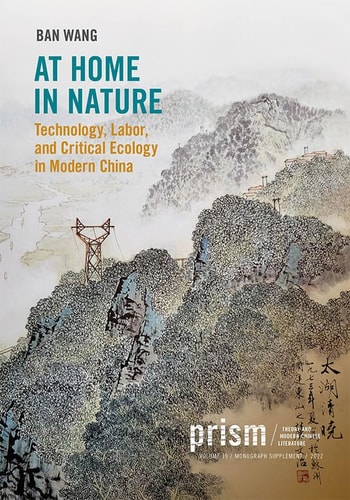
At Home in Nature: Technology, Labor, and Critical Ecology in Modern China
0
0
As an Amazon Associate and affiliate partner, Menrva Books earns from qualifying purchases. Learn more
Author Description
In this supplement to volume 19 of Prism: Theory and Modern Chinese Literature, author Ban Wang brings together two perspectives, ecosocialism and the critiques of the Frankfurt School, to consider how Chinese scholars and literati such as Kang Youwei, Lu Xun, Shen Congwen, and Chen Quifan have responded to the ecological challenges of the Anthropocene and the rise of a global technocratic elite. Reckless development, artificial intelligence, genetic engineering and other varieties of technoscientific hubris have caused rifts in human-human and human-nature relationships. In essays, speculative fiction, films, documentaries, Chinese artists pursue various strategies to critique eco-destructive tendencies. Ban Wang likewise seeks to recover the utopian dream of the reconciliation of humans and nature.
Menrva's Summary
THE THESIS
This book investigates how Chinese scholars and literati have grappled with the ecological challenges of the Anthropocene and the rise of a global technocratic elite. Drawing on ecosocialism and the critiques of the Frankfurt School, Ban Wang examines the responses of figures such as Kang Youwei, Lu Xun, Shen Congwen, and Chen Quifan to issues like reckless development, artificial intelligence, and genetic engineering. The book explores how Chinese artists, through essays, speculative fiction, films, and documentaries, critique eco-destructive tendencies and pursue strategies for reconciliation. Ultimately, Ban Wang seeks to recover the utopian dream of harmony between humans and nature in the face of technoscientific hubris.
THE SCOPE MAP
- Analysis of Chinese scholarly and literary responses to ecological challenges.
- Integration of ecosocialism and Frankfurt School critiques.
- Examination of figures like Kang Youwei, Lu Xun, Shen Congwen, and Chen Quifan.
- Discussion of contemporary issues: reckless development, AI, genetic engineering.
- Exploration of artistic strategies in essays, speculative fiction, films, and documentaries.
- Focus on the rifts caused by technoscientific hubris in human-human and human-nature relationships.
- Recovery of the utopian ideal of human-nature reconciliation.
THE AUTHORITY PERSPECTIVE
This work is positioned as a scholarly supplement to 'Prism: Theory and Modern Chinese Literature,' indicating a focus on academic discourse and critical analysis. The integration of diverse theoretical frameworks (ecosocialism, Frankfurt School) and a wide range of Chinese cultural production suggests a text aimed at specialists in comparative literature, environmental studies, and critical theory. The book's approach to contemporary ecological and technological issues through a historical and literary lens implies a dense, analytical exploration of complex themes.
Page Count:
208
Publication Date:
2023-01-01
Publisher:
Duke University Press
ISBN-10:
1478024720
ISBN-13:
9781478024729
Philosophy
Non-Fiction
History
Technology
Critical Theory
Ecology
Chinese
Anthropocene
Community Tags
Similar Books