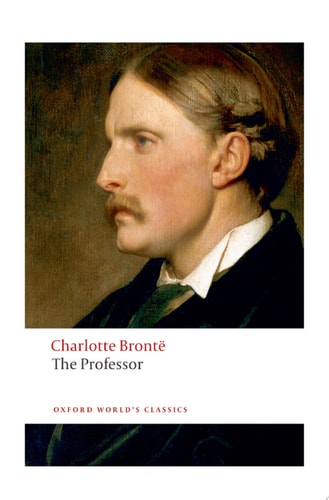
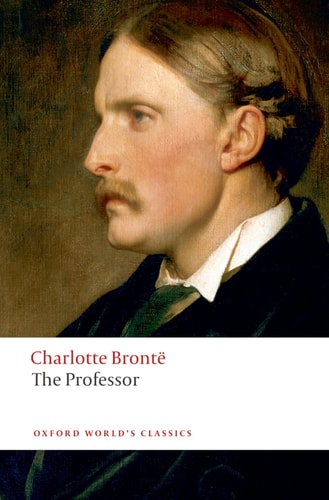
The Professor
0
0
As an Amazon Associate and affiliate partner, Menrva Books earns from qualifying purchases. Learn more
Author Description
For the first time a major novel by Charlotte Brontë appears in an edition based directly on the author's manuscript. Like her other mature work, The Professor owes much to her relationship with M. Heger, her Brussels schoolmaster. The first of her full-length novels, it is of special interest since it was written comparatively soon after her experiences in Brussels in the early 1840s, but not published until 1857, after her death. A full introduction gives an account of its composition, analyses the manuscript, and describes the circumstances of its eventual publication, in an inaccurate form, under the editorship of A. B. Nicholls. Appendices include an unused `Preface' - one of Charlotte Brontë's attempts to `recast' the novel - and a list of substantive variants between the manuscript and the first edition. Her last fragmentary novel, `Emma', begun after Villette, is now transcribed directly from the author's rough draft, instead of from the polished and revised text produced by Nicholls, George Smith, and Thackeray for the Cornhill Magazine in 1860. The volume contains full indexes to Biblical and literary allusions in Charlotte Brontë's four major novels, thus giving a fascinating guide to the nature and extent of her reading. The editors also make use of continuing research by providing a list of additions and corrections to all previous volumes in the Clarendon Brontë series.
Menrva's Summary
THE PULSE
William Crimsworth, an orphaned Englishman, seeks to establish his independence and professional identity by traveling to Brussels to teach at a boys' school. Facing the rigid social hierarchies of the nineteenth century and the manipulative machinations of his employer, M. Pelet, and the headmistress, Mlle. Reuter, Crimsworth must navigate a landscape of professional isolation and emotional restraint. The narrative, presented in the first-person, follows his struggle to maintain his moral integrity while pursuing a quiet, self-sufficient life. His journey is defined by the tension between his desire for autonomy and the restrictive expectations of the academic and social environments he inhabits.
INSIDE THE PAGES
- First-person retrospective narration
- Exploration of professional ambition and social class
- Detailed depiction of 19th-century Brussels school life
- Focus on stoicism and emotional repression
- Contrast between English and Continental cultural values
- Development of the protagonist's internal moral compass
- Examination of power dynamics in educational settings
- Inclusion of critical scholarly apparatus and manuscript analysis
THE COLLECTIVE ECHO
Discussion often centers on the novel's status as a precursor to the more expansive works of the author, noting its restrained tone and focus on professional development. Readers frequently highlight the stark contrast between this work and the more dramatic narratives found in her later publications. Critics often examine the influence of the author's personal experiences in Brussels on the setting and character dynamics. The inclusion of the unfinished fragment 'Emma' and the scholarly appendices provides a comprehensive look at the author's creative process for those interested in textual history. This edition is widely regarded as a significant resource for understanding the evolution of the author's prose and thematic concerns.
Page Count:
400
Publication Date:
2008-01-01
Publisher:
OUP Oxford
ISBN-10:
0192669222
ISBN-13:
9780192669223
Romance
Bildungsroman
English
Classic Literature
Victorian
Teachers fiction
Literary Criticism
English & College Success
Academic
Community Tags
Other Editions(4)


Similar Books