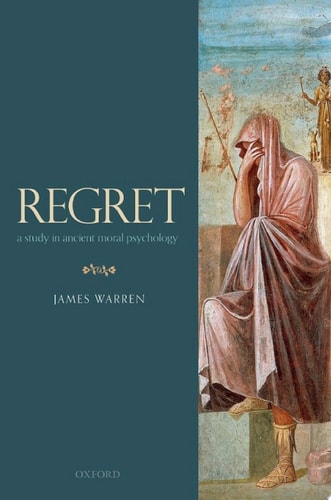
Regret: A Study in Ancient Moral Psychology
0
0
As an Amazon Associate and affiliate partner, Menrva Books earns from qualifying purchases. Learn more
Author Description
This book provides a study of regret (metameleia) in the moral psychology of Plato, Aristotle, and the Stoics. It was important for all these philosophers to insist that regret is a characteristic of neither fully virtuous nor wholly irredeemable characters. Rather, they took regret to be something that affects people who retrospectively feel pain at realising an earlier mistaken action. Regret sets out in full the accounts of the nature of this emotion found in the works of these philosophers, viewing them in the context of their respective accounts of virtuous and non-virtuous agents, ethical progress, the role of knowledge in producing good actions, and compares it with modern philosophical notions of 'agent regret'.
Menrva's Summary
THE THESIS
This book investigates the conceptualization of regret (metameleia) within the moral psychology of Plato, Aristotle, and the Stoics to determine its function in ethical development. James Warren, a scholar of ancient philosophy, examines how these thinkers positioned regret as a specific emotional state distinct from both total virtue and total vice. By analyzing primary texts, the author argues that these philosophers viewed regret as a retrospective pain triggered by the realization of a past error, serving as a critical indicator of an agent's progress toward or away from moral excellence.
THE SCOPE MAP
What You Will Find
- Comparative analysis of metameleia across Platonic, Aristotelian, and Stoic frameworks
- Examination of the relationship between regret, knowledge, and the capacity for virtuous action
- Synthesis of ancient perspectives with contemporary philosophical discussions regarding agent regret
Scope Limits
- Does not provide a comprehensive history of all ancient emotional theories
- Excludes non-philosophical or literary treatments of regret in antiquity
THE AUTHORITY PERSPECTIVE
Scholars and students of classical philosophy frequently note the rigorous academic density of the prose and the precision of Warren's textual analysis. Experts highlight this work as a significant contribution to the study of ancient moral psychology, particularly for its clear articulation of how regret functions within the broader context of ethical agency.
Page Count:
206
Publication Date:
2021-01-01
Publisher:
OUP Oxford
ISBN-10:
0192665456
ISBN-13:
9780192665454
Philosophy
Ethics
Community Tags
Similar Books