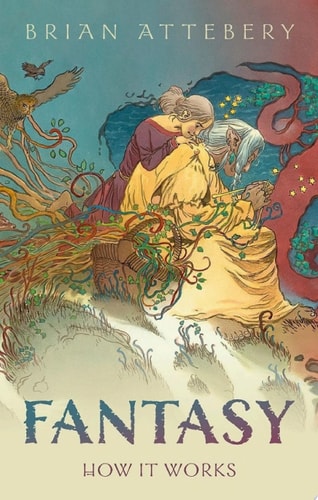
Fantasy: How It Works
0
0
As an Amazon Associate and affiliate partner, Menrva Books earns from qualifying purchases. Learn more
Author Description
An exciting and accessible study of the genre of fantasy. One of the dominant modes of storytelling in the twenty-first century, fantasy can mirror contemporary experiences and convey our anxieties and longings better than any representation of the merely real. It is the lie that speaks truth. This book addresses two central questions about fantastic storytelling: first, how can it be meaningful if it doesn't claim to represent things as they are, and second, what kind of change can it make in the world? How can a form of storytelling that alters physical laws and denies facts about the past be at the same time a source of insight into human nature and the workings of the world? What kind of social, political, cultural, intellectual work does fantasy perform in the world--the world of the reader, that is, not that of the characters? Focusing on various aspects of fantastic world-building and story creation in classic and contemporary fantasy, from the use of symbolic structures to the way new stories incorporate bits of significance from earlier texts, this book shows how fantasy allows writers such as Michael Cunningham, Hans Christian Anderson, Helene Wecker, C. S. Lewis, Ursula K. Le Guin, Nnedi Okorafor, Nalo Hopkinson, George MacDonald, Aliette deBodard, and Patricia Wrightson to test new modes of understanding and interaction and thus to rethink political institutions, social practices, and models of reality.
Menrva's Summary
THE THESIS
This book investigates how fantasy literature functions as a meaningful mode of storytelling that provides insight into human nature and social reality despite its departure from physical laws. Brian Attebery, a scholar of the fantastic, utilizes a comparative framework to analyze how authors manipulate symbolic structures and narrative conventions to address contemporary anxieties. He argues that fantasy serves as a tool for testing new modes of understanding, ultimately enabling readers to rethink political institutions and social practices.
THE SCOPE MAP
What You Will Find
- Analysis of world-building techniques in classic and contemporary fantasy literature.
- Examination of how new stories incorporate and transform significance from earlier texts.
- Discussion of the social, political, and intellectual work performed by the genre.
Scope Limits
- The text focuses primarily on the impact of fantasy on the reader's world rather than an exhaustive history of the genre.
- It does not provide a comprehensive catalog of every fantasy subgenre or author.
THE AUTHORITY PERSPECTIVE
Experts recognize this work as a significant contribution to the academic study of the fantastic, noting its ability to bridge the gap between literary theory and popular genre fiction. Readers frequently highlight the clarity of Attebery's prose, which makes complex theoretical concepts accessible to both students and enthusiasts of the genre.
Page Count:
206
Publication Date:
2022-01-01
Publisher:
OUP Oxford
ISBN-10:
0192668935
ISBN-13:
9780192668936
Non-Fiction
English
English & College Success
Literary Criticism
Community Tags
Similar Books