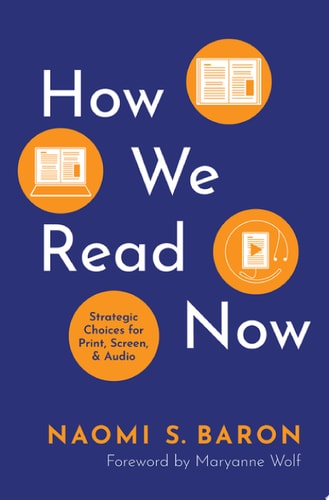
How We Read Now: Strategic Choices for Print, Screen, and Audio
0
0
As an Amazon Associate and affiliate partner, Menrva Books earns from qualifying purchases. Learn more
Author Description
An engaging and authoritative guide to the impact of reading medium on learning, from a foremost expert in the fieldWe face constant choices about how we read. Educators must select classroom materials. College students weigh their textbook options. Parents make decisions for their children. The digital revolution has transformed reading, and with the recent turn to remote learning, onscreen reading may seem like the only viable option. Yet selecting digital is often based on cost or convenience, not on educational evidence. Now more than ever it is imperative to understand how reading medium actually impacts learning--and what strategies we need in order to read effectively in all formats. In How We Read Now, Naomi Baron draws on a wealth of knowledge and research to explain important differences in the way we concentrate, understand, and remember across multiple formats. Mobilizing work from international scholarship along with findings from her own studies of reading practices, Baron addresses key challenges--from student complaints that print is boring to the hazards of digital reading for critical thinking. Rather than arguing for one format over another, she explains how we read and learn in different settings, shedding new light on the current state of reading. The book then crucially connects research insights to concrete applications, offering practical approaches for maximizing learning with print, digital text, audio, and video. Since screens and audio are now entrenched--and invaluable-platforms for reading, we need to rethink ways of helping readers at all stages use them more wisely. How We Read Now shows us how to do that.
Menrva's Summary
THE THESIS
How does the medium of delivery—print, screen, or audio—fundamentally alter the cognitive processes of learning, concentration, and retention? Naomi S. Baron, a linguistics professor and expert in digital communication, synthesizes international research and her own empirical studies to evaluate the efficacy of various reading formats. She argues that while digital platforms offer convenience, they often lack the cognitive affordances of print, necessitating a strategic approach to media selection based on educational goals rather than mere accessibility.
THE SCOPE MAP
What You Will Find
- Comparative analysis of cognitive retention between physical print and digital screens
- Examination of the impact of audio and video formats on information processing
- Evidence-based strategies for educators and students to optimize learning across platforms
- Synthesis of international scholarship regarding digital literacy and reading habits
Scope Limits
- Does not advocate for the total abandonment of digital technology in favor of print
- Does not focus on the technical development of reading software or hardware interfaces
THE AUTHORITY PERSPECTIVE
Experts recognize this work as a foundational text for understanding the intersection of cognitive science and modern digital literacy. Readers frequently note the clarity of the prose and the practical applicability of the author's findings for both classroom settings and personal development.
Page Count:
305
Publication Date:
2021-01-01
Publisher:
Oxford University Press
ISBN-10:
0190084111
ISBN-13:
9780190084110
Non-Fiction
Literacy
English & College Success
Education
Professional Career & Trade
Critical thinking
Reading
Educational Technology
Media Studies
Computers and literacy
Distance & Online Education
Technology
Linguistics
Reading comprehension
English
Community Tags
Similar Books