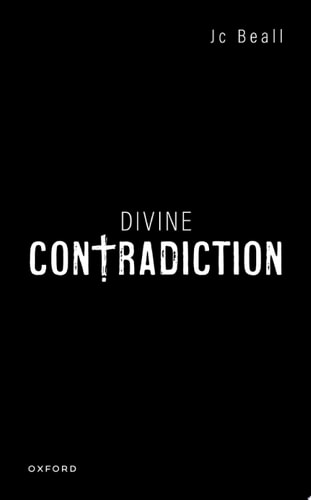
Divine Contradiction: Oxford Studies in Analytic Theology
0
0
As an Amazon Associate and affiliate partner, Menrva Books earns from qualifying purchases. Learn more
Author Description
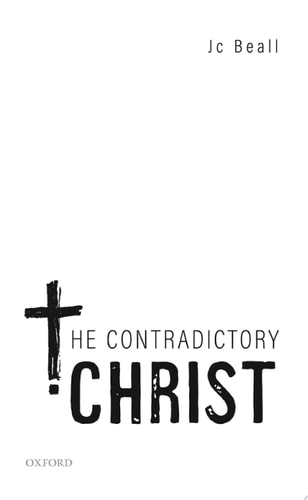
Building on his paradigm-shifting work on the incarnation in The Contradictory Christ (OUP, 2021), Jc Beall extends a robust contradictory theology with an account of the trinity. Throughout the history of the Christian church, heretics, apophatics, mystics, atheists, and many others have long proclaimed that the doctrine of the trinity - one of the central doctrines of the Christian faith - is contradictory. In this work, Beall agrees; however, as Beall convincingly argues, one needn't abandon orthodoxy, play language games, inflate one's metaphysics, nor abandon the standard faith in the face of such divine contradiction. Instead, one can accept central axioms of the trinity at face value and, with a suitable account of logical entailment, accept the 'contradictory truths' thereby entailed. With the clarity and precision that only a logician could provide, Beall provided theology and the Christian church in general with a very simple and viable (and arguably correct) model of divine reality. Unlike the vast number of theologians and philosophers before him, Beall rejects the quest for a logically consistent account of divine reality. The triune god (viz., God) is truly and fully described only via contradiction. As such, attempts to remove the contradiction are attempts to remove truths of God.
Menrva's Summary
THE THESIS
This work investigates whether the doctrine of the Trinity can be maintained as a logically contradictory yet orthodox truth. J. C. Beall, a logician and philosopher, utilizes formal logical frameworks to argue that the traditional Christian doctrine of the Trinity is inherently contradictory. Rather than attempting to resolve these contradictions through complex metaphysical inflation or linguistic reinterpretation, Beall proposes that these contradictions should be accepted as accurate descriptions of divine reality.
THE SCOPE MAP
What You Will Find
- A formal logical model for interpreting the Trinity as a contradictory entity
- An analysis of the relationship between orthodoxy and logical entailment
- A critique of traditional attempts to reconcile divine mystery with classical logic
Scope Limits
- The text does not provide a historical survey of all Trinitarian debates
- It does not address non-Christian theological perspectives on the nature of God
THE AUTHORITY PERSPECTIVE
Readers frequently note the high level of technical logical rigor applied to theological subject matter, making this a challenging text for those without a background in analytic philosophy. Experts highlight this as a significant contribution to the field of analytic theology, specifically for its departure from traditional attempts to harmonize divine doctrine with classical consistency.
Page Count:
336
Publication Date:
2023-01-01
Publisher:
OUP Oxford
ISBN-10:
0192660098
ISBN-13:
9780192660091
Philosophy
Religion
Theology
Christian Doctrine
Metaphysics
Analytic Theology
Religion
Logic
Community Tags
Similar Books