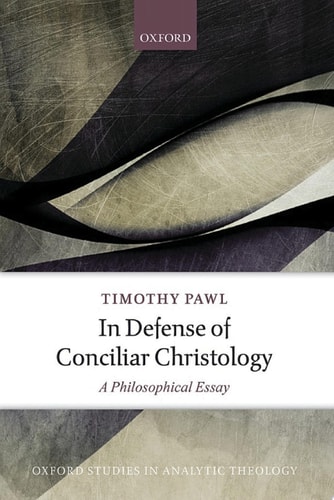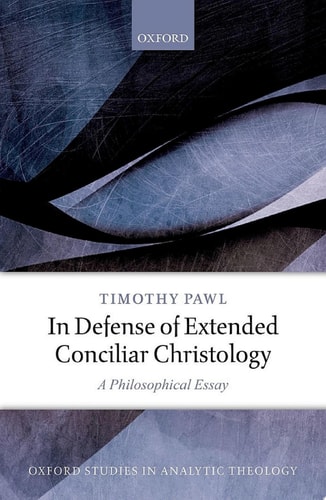
In Defense of Extended Conciliar Christology: A Philosophical Essay
0
0
As an Amazon Associate and affiliate partner, Menrva Books earns from qualifying purchases. Learn more
Author Description
In Defense of Extended Conciliar Christology: A Philosophical Essay examines the logical consistency and coherence of Extended Conciliar Christology-the Christological doctrine that results from conjoining Conciliar Christology, the Christology of the first seven ecumenical councils of the Christian Church, with five additional theses. These theses are the claims that multiple incarnations are possible; Christ descended into Hell during his three days of death; Christ's human will was free; Christ was impeccable; and that Christ, via his human intellect, knew all things past, present, and future. These five theses, while not found in the first seven ecumenical councils, are common in the Christian theological tradition. The main question Timothy Pawl asks in this book is whether these five theses, when conjoined with Conciliar Christology, imply a contradiction. This study does not undertake to defend the truth of Extended Conciliar Christology. Rather, it shows that the extant philosophical objections to Extended Conciliar Christology fail.
Menrva's Summary
THE THESIS
Does the conjunction of Conciliar Christology with five specific traditional theological theses result in a logical contradiction? Timothy Pawl, a scholar specializing in analytic theology, utilizes the tools of contemporary formal logic to evaluate the coherence of Extended Conciliar Christology. He examines the compatibility of the Christology established by the first seven ecumenical councils with five additional claims regarding the incarnation, the descent into Hell, human will, impeccability, and divine knowledge. The work functions as a rigorous philosophical defense against existing objections to these theological positions.
THE SCOPE MAP
What You Will Find
- A formal logical analysis of the compatibility between Conciliar Christology and five specific theological theses.
- An evaluation of philosophical objections regarding the possibility of multiple incarnations and Christ's human knowledge.
- A systematic breakdown of the mechanics of Christ's human will and impeccability within a conciliar framework.
Scope Limits
- The text does not attempt to prove the theological truth of the five theses or the conciliar doctrines themselves.
- The analysis is restricted to logical consistency rather than historical or scriptural exegesis.
THE AUTHORITY PERSPECTIVE
Scholars in the field of analytic theology recognize this work as a precise application of formal logic to traditional Christian dogma. Readers frequently note the technical density of the prose, which requires a background in philosophical logic to fully navigate the arguments presented.
Page Count:
262
Publication Date:
2018-01-01
Publisher:
OUP Oxford
ISBN-10:
0192570889
ISBN-13:
9780192570888
Religion
Philosophy
Christology
Analytic Theology
Metaphysics
Jesus Christ
Christian Doctrine
Theology
Community Tags
Similar Books