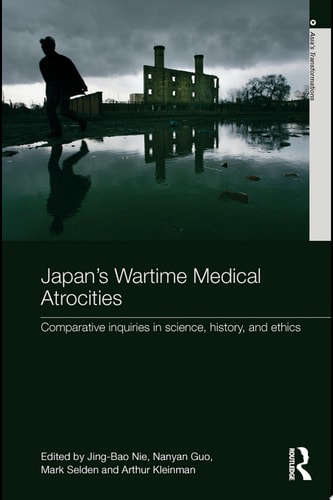
Japan's Wartime Medical Atrocities: Comparative Inquiries in Science, History, and Ethics
0
0
As an Amazon Associate and affiliate partner, Menrva Books earns from qualifying purchases. Learn more
Author Description
Prior to and during the Second World War, the Japanese Army established programs of biological warfare throughout China and elsewhere. In these “factories of death,” including the now-infamous Unit 731, Japanese doctors and scientists conducted large numbers of vivisections and experiments on human beings, mostly Chinese nationals. However, as a result of complex historical factors including an American cover-up of the atrocities, Japanese denials, and inadequate responses from successive Chinese governments, justice has never been fully served. This volume brings together the contributions of a group of scholars from different countries and various academic disciplines. It examines Japan’s wartime medical atrocities and their postwar aftermath from a comparative perspective and inquires into perennial issues of historical memory, science, politics, society and ethics elicited by these rebarbative events. The volume’s central ethical claim is that the failure to bring justice to bear on the systematic abuse of medical research by Japanese military medical personnel more than six decades ago has had a profoundly retarding influence on the development and practice of medical and social ethics in all of East Asia. The book also includes an extensive annotated bibliography selected from relevant publications in Japanese, Chinese and English.
Menrva's Summary
THE THESIS
This volume investigates the profound and lasting ethical implications of Japan's wartime medical atrocities, particularly the biological warfare programs and human experimentation conducted by the Japanese Army. The book examines these horrific events, including the activities of Unit 731, through the lens of comparative inquiries across science, history, and ethics, drawing on contributions from international scholars. It addresses the complex historical factors that have prevented full justice, such as American cover-ups, Japanese denials, and inadequate responses from Chinese governments. The central ethical argument posits that the failure to hold military medical personnel accountable for the systematic abuse of medical research has significantly hindered the development of medical and social ethics throughout East Asia.
THE SCOPE MAP
- Analysis of Japan's wartime biological warfare programs and human experimentation, including Unit 731.
- Comparative examination of these atrocities from historical, scientific, and ethical perspectives.
- Exploration of the postwar aftermath and the factors contributing to a lack of full justice.
- Inquiry into issues of historical memory, science, politics, society, and ethics.
- Central ethical claim regarding the retarding influence on medical and social ethics in East Asia.
- Contributions from scholars across different countries and academic disciplines.
- Extensive annotated bibliography of relevant publications in Japanese, Chinese, and English.
THE AUTHORITY PERSPECTIVE
This scholarly work is presented as a critical examination of historical injustices and their ongoing ethical consequences. The authors and contributors aim to shed light on the complex factors that have obscured accountability for Japan's wartime medical atrocities. The volume's central ethical argument suggests that the failure to address these past abuses has had a significant retarding effect on the development of medical and social ethics in East Asia. The inclusion of an extensive annotated bibliography indicates a thorough approach to the subject matter, intended for academic and informed readership.
Page Count:
272
Publication Date:
2013-07-03
Publisher:
Routledge
ISBN-10:
1136952608
ISBN-13:
9781136952609
Non-Fiction
History
Human rights
Medical Ethics
East Asia
Community Tags
Similar Books