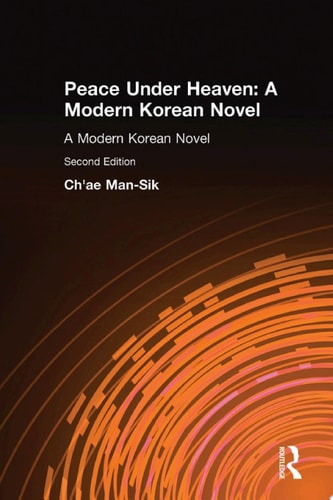
Peace Under Heaven: A Modern Korean Novel
0
0
As an Amazon Associate and affiliate partner, Menrva Books earns from qualifying purchases. Learn more
Author Description
Originally published in Seoul in 1938, "Peace Under Heaven" is a satirical novel centering on the household of a Korean landlord during the Japanese colonial occupation. Master Yun, embodying the traditional ambitions of a standard Korean paterfamilias, by being projected fast forward into a modern urban environment, caricatures the increasing irrelevance of Confucian mores to 20th-century social reality. Depicting the anomic lives of the Yun household in colonial Seoul, Chase Man-Sik, one of modern Korea's best-known writers, uses black comedy to underscore the collapse of ritualistic traditional values in the face of capitalist modernisation. The decadence of the nouveau riche pseudo-aristocrat Master Yun is interwoven with insights into the customary bases of oppression of Korean women into the self-deceptions underlying collaboration by Koreans with the Japanese oppressor. The savage hilarity of Chae's style lends force and historical relevance to his insight into the attitudes of the milieu in which his narrative is set.
Menrva's Summary
THE PULSE
A Korean landlord navigates the moral and social complexities of life under Japanese colonial rule and encroaching modernization. Master Yun, a traditional paterfamilias, finds his Confucian values increasingly irrelevant in the face of 20th-century social realities in colonial Seoul. The novel satirizes the decadent lives of his household, highlighting the collapse of traditional values due to capitalist modernization and the self-deceptions of collaboration with the Japanese oppressor. The narrative also explores the oppression of Korean women within this changing social landscape.
INSIDE THE PAGES
- Satirical portrayal of a Korean landlord's household during the Japanese colonial occupation.
- Exploration of the conflict between traditional Confucian mores and modern social realities.
- Black comedy used to depict the collapse of ritualistic traditional values.
- Critique of capitalist modernization's impact on Korean society.
- Insights into the customary oppression of Korean women.
- Examination of the self-deceptions underlying Korean collaboration with Japanese oppressors.
- Chae Man-Sik's distinctive, savagely hilarious writing style.
- Historical relevance to the attitudes and milieu of colonial Korea.
THE COLLECTIVE ECHO
The novel is recognized for its sharp satire and black comedy, effectively using humor to underscore the erosion of traditional values in colonial Korea. Chae Man-Sik's style is noted for its savage hilarity, lending force to his insights into the period's social dynamics. The work provides a critical look at the impact of modernization and collaboration on Korean society, particularly concerning the oppression of women. Its historical relevance lies in its unflinching portrayal of the attitudes prevalent during the Japanese occupation.
Page Count:
272
Publication Date:
2015-07-17
Publisher:
Taylor & Francis
ISBN-10:
1317463129
ISBN-13:
9781317463122
Literary Fiction
Fiction
Historical Fiction
Satire
Colonialism
Korean
Community Tags
Similar Books