The Hidden Force
0
0
As an Amazon Associate and affiliate partner, Menrva Books earns from qualifying purchases. Learn more
Author Description
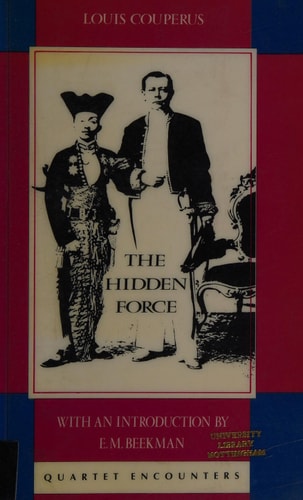
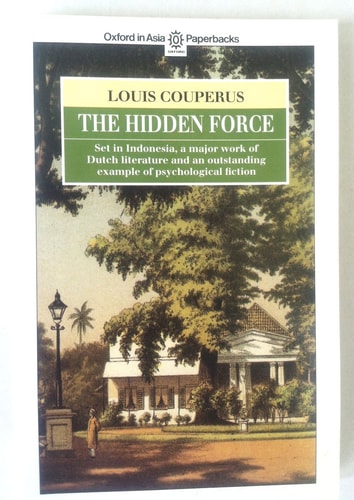
First published in Dutch in 1990, The Hidden Force is a masterpiece of psychological fiction by one of Holland's greatest novelists. Set on the island of Java at the turn of the century, it describes the tragedy of Van Oudijck, a high official in the colonial administration. Rigidly pragmatic, Van Oudijck is blind to the possibility of fate and the silent powers of angler (magical possession.) By the end of the novel he has withdrawn to a small village in the hinterlands, the tragic victim of a way of life he cannot fully understand. The book is important both for its literary achievement and for what it tells us about the relation of colonizer to colonized in the Dutch East Indies. Although written forty-five years before Indonesian independence, it reveals many of the reasons why the Dutch colonial empire was destined to fail. The decline of one individual comes to symbolize the futility of the entire colonial enterprise.
Menrva's Summary
THE PULSE
The rigid pragmatism of a colonial official faces an inevitable collapse when confronted by the mysterious, untamable forces of the Javanese landscape. Van Oudijck, a high-ranking administrator in the Dutch East Indies, operates under the assumption that logic and order can govern the colonial experience. His objective is to maintain control over his jurisdiction, yet he remains oblivious to the cultural and spiritual undercurrents that define the local environment. Opposed by the subtle, pervasive influence of 'angker'—a form of magical possession—Van Oudijck finds his authority and personal life systematically dismantled. The narrative follows his descent from a position of power to a state of isolated resignation in the hinterlands, illustrating the friction between European rationalism and indigenous reality.
INSIDE THE PAGES
- Exploration of the psychological toll of colonial administration
- Contrast between Western pragmatism and indigenous mysticism
- Detailed atmospheric depiction of turn-of-the-century Java
- Examination of the systemic fragility of the Dutch colonial empire
- Character study of a man blinded by his own cultural biases
- Use of the 'angker' concept as a catalyst for narrative tension
- Symbolic representation of imperial decline through personal tragedy
- Third-person omniscient perspective focusing on social and political dynamics
THE COLLECTIVE ECHO
Readers and critics frequently highlight the novel's ability to capture the stifling atmosphere of colonial life through a lens of psychological realism. Discussion often centers on how the author uses the protagonist's personal downfall to mirror the inevitable disintegration of the Dutch colonial project. Many observers note that the prose remains focused on the collision between two incompatible worldviews, favoring character study over overt action. The effectiveness of the setting is often cited as a primary strength, as the environment itself acts as an antagonist to the European characters. Readers appreciate the nuanced portrayal of the power dynamics between the colonizer and the colonized, which provides historical depth to the narrative.
Page Count:
316
Publication Date:
1992-01-01
Publisher:
Oxford University Press
ISBN-10:
0195885864
ISBN-13:
9780195885866
Fiction
Literary Fiction
Historical Fiction
Psychological
classic
Colonialism