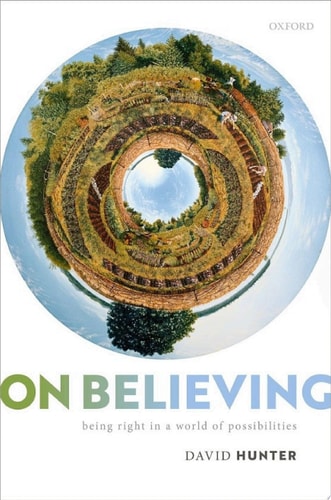
On Believing: Being Right in a World of Possibilities
0
0
As an Amazon Associate and affiliate partner, Menrva Books earns from qualifying purchases. Learn more
Author Description
Developing original accounts of the many aspects of belief, On Believing puts the believer at the heart of the story. Hunter argues that to believe something is to be in position to do, think, and feel things in light of a possibility whose obtaining would make one right. The logical aspect is that being right depends only on whether that possibility obtains. The psychological one concerns how that possibility can rationalise what one does, thinks, and feels. But, Hunter argues, beliefs are not causes, capacities, or dispositions. Rather, believing rationalises because possibilities are potential reasons. Hunter also denies that believing is a form of representing. The objects of belief are possibilities, not representations, and belief states are not themselves true or false. Hunter defends this modal view against familiar objections and explores how objective and subjective limits to belief generate credal illusions and ground credal necessities. Developing a novel account of the normativity of belief, he argues that voluntary acts of inference make us responsible for our beliefs. While denying that believing is intrinsically normative, Hunter grounds the ethics of belief in attributive goodness. Believing something is to our credit when it shows us to be good in some way, and what we ought to believe depends on what we ought to know, and not on the evidence we have. The ethics of belief, Hunter argues, concern how a believer ought to be positioned in a world of possibilities.
Menrva's Summary
THE THESIS
This book investigates the nature of belief by proposing that to believe is to be positioned in relation to a possibility that, if it obtains, renders the believer correct. David Hunter, a philosopher, challenges traditional representationalist accounts of belief by arguing that beliefs are not internal states or dispositions but rather rationalizing relations to possibilities. He constructs a modal framework that separates the logical condition of being right from the psychological process of rationalization, ultimately grounding the ethics of belief in attributive goodness rather than purely evidential norms.
THE SCOPE MAP
What You Will Find
- A modal theory of belief that treats possibilities as the primary objects of cognition.
- An analysis of how voluntary acts of inference establish personal responsibility for belief.
- A critique of representationalist and dispositional models of mental states.
- A framework for understanding credal illusions and necessities.
Scope Limits
- The text does not provide a comprehensive survey of historical epistemological debates.
- It does not offer practical self-help strategies for belief modification.
THE AUTHORITY PERSPECTIVE
Philosophical scholars recognize this work as a rigorous contribution to contemporary epistemology that challenges standard representationalist paradigms. Readers frequently note the high level of technical density in the prose, making it most suitable for advanced students and professional philosophers.
Page Count:
200
Publication Date:
2022-01-01
Publisher:
OUP Oxford
ISBN-10:
0192675613
ISBN-13:
9780192675613
Philosophy
Metaphysics
Ethics of Belief
Epistemology
Community Tags
Similar Books