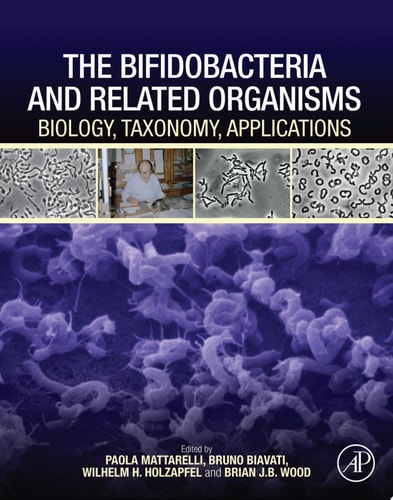
The Bifidobacteria and Related Organisms: Biology, Taxonomy, Applications
0
0
As an Amazon Associate and affiliate partner, Menrva Books earns from qualifying purchases. Learn more
Author Description
The Bifidobacteria and Related Organisms: Biology, Taxonomy, Applications brings together authoritative reviews on all aspects of Bifidobacteria and related genera. Their place within the Phylum Actinobacteria is discussed first, and this is followed by descriptions of the genera Bifidobacterium, Alloscardovia, Aeriscardovia, Bombiscardovia, Gardnerella, Metascardovia, Parascardovia and Scardovia and the currently accredited species within those genera. The increased availability of genome sequences and molecular tools for studying bifidobacteria provides important information about their taxonomy, physiology and interactions with their host. Also considerations about common bifidobacterial core maintenance during the mutual coevolution of a host and its intestinal microbes could be relevant for health claims for the ability of symbiotic gut bacteria to provide health benefits to their host, and for evaluating such claims in scientifically valid experiments. Chemotaxonomy is important to our understanding of these genera and so is considered along with physiological and biochemical aspects before proceeding to examine clinical and other practical aspects. The ability to maintain pure cultures and to grow cells in industrial quantities when required for applications requires that the cells' environmental and nutritional needs are well understood. Some species are important clinically and as animal digestive tract synbionts-and even play a part in honey production-so these matters are considered along with milk oligosaccharides' roles in gut flora development in neonates.
Menrva's Summary
THE THESIS
This book provides a comprehensive overview of Bifidobacteria and related organisms, detailing their biological characteristics, taxonomic classifications, and practical applications. The authors, experts in the field, synthesize current knowledge on these bacteria, beginning with their placement within the Phylum Actinobacteria. Subsequent chapters meticulously describe genera such as Bifidobacterium, Alloscardovia, and Gardnerella, including their accredited species. The text emphasizes the impact of genomic sequencing and molecular tools on understanding their taxonomy and physiology, and explores their interactions with hosts, which is crucial for validating health claims associated with symbiotic gut bacteria.
THE SCOPE MAP
- Classification within the Phylum Actinobacteria
- Detailed descriptions of genera including Bifidobacterium, Alloscardovia, Aeriscardovia, Bombiscardovia, Gardnerella, Metascardovia, Parascardovia, and Scardovia
- Discussion of accredited species within each genus
- Impact of genome sequences and molecular tools on taxonomy and physiology
- Exploration of host-microbe interactions relevant to health claims
- Considerations of chemotaxonomy, physiological, and biochemical aspects
- Examination of clinical and practical applications
- Nutritional and environmental needs for pure culture maintenance and industrial growth
- Roles in clinical settings, animal digestion, and honey production
- Significance of milk oligosaccharides in neonatal gut flora development
THE AUTHORITY PERSPECTIVE
This text is structured as a collection of authoritative reviews, indicating a comprehensive and detailed exploration of its subject matter. The depth of coverage, from broad taxonomic placement to specific applications and host interactions, suggests a resource intended for researchers, microbiologists, and potentially clinicians or those in the food industry. The emphasis on molecular tools and scientific validation points to a rigorous, evidence-based approach to understanding these organisms.
Page Count:
324
Publication Date:
2017-09-22
Publisher:
Elsevier Science
ISBN-10:
0128050608
ISBN-13:
9780128050606
Non-Fiction
Science
Health
Microbiology
Taxonomy
Bacteriology
Community Tags
Similar Books