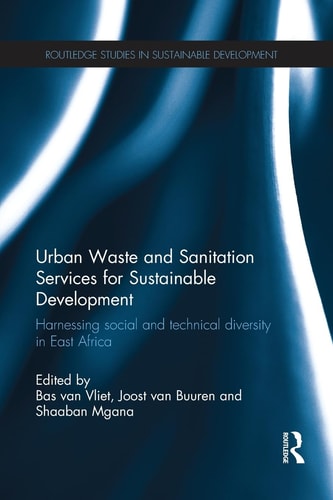
Urban Waste and Sanitation Services for Sustainable Development: Harnessing Social and Technical Diversity in East Africa
0
0
As an Amazon Associate and affiliate partner, Menrva Books earns from qualifying purchases. Learn more
Author Description
Urban sanitation and solid waste sectors are under significant pressure in East Africa due to the lack of competent institutional capacity and the growth of the region's urban population. This book presents and applies an original analytical approach to assess the existing socio-technical mixtures of waste and sanitation systems and to ensure wider access, increase flexibility and ecological sustainability. It shows how the problem is not the current diversity in waste and sanitation infrastructures and services and variety of types and scales of technology, of formal and informal sector involvement, and of management and ownership modes. The book focuses instead on the lack of an integrative approach to managing and upgrading of the various waste and sanitation configurations and services so as to ensure wider access, flexibility and sustainability for the low income populations who happen to be the main stakeholders. This approach, coined "Modernized Mixtures", serves as a nexus throughout the book. The empirical core addresses the waste and sanitation challenges and debates at each scale - from the micro-level (households) to the macro-level (international support) - and is based on the results of a five-year-long interdisciplinary, empirical research program. It assesses the socio-technical diversity in waste and sanitation and provides viable solutions to sanitation and waste management in East Africa. This book provides students, researchers and professional in environmental technology, sociology, management and urban planning with an integrated analytical perspective on centralized and decentralized waste and sanitation configurations and tools for improvement in the technology, policy and management of sanitation and solid waste sectors.
Menrva's Summary
THE THESIS
This book investigates how to improve urban waste and sanitation services in East Africa by integrating diverse socio-technical systems. Facing pressure from population growth and institutional capacity gaps, the region's waste and sanitation sectors require innovative management. The authors propose an original analytical approach,
THE SCOPE MAP
- An original analytical approach termed "Modernized Mixtures" for assessing and upgrading waste and sanitation systems.
- Assessment of socio-technical diversity in waste and sanitation across micro (household) to macro (international support) levels.
- Empirical data and analysis from a five-year interdisciplinary research program in East Africa.
- Viable solutions for sanitation and waste management tailored to the East African context.
- Integrated analytical perspectives on centralized and decentralized waste and sanitation configurations.
- Tools for improvement in technology, policy, and management of sanitation and solid waste sectors.
THE AUTHORITY PERSPECTIVE
The book offers an integrated analytical perspective on waste and sanitation configurations, providing tools for improvement in technology, policy, and management. It is aimed at students, researchers, and professionals in environmental technology, sociology, management, and urban planning. The approach presented is designed to ensure wider access, flexibility, and ecological sustainability in urban waste and sanitation services, particularly for low-income populations who are the main stakeholders. The empirical core is based on extensive interdisciplinary research conducted over five years in East Africa.
Page Count:
176
Publication Date:
2016-04-24
Publisher:
Routledge
ISBN-10:
1138687170
ISBN-13:
9781138687172
Science & Technology
Non-Fiction
Economics
East Africa
Management
Sociology
urban planning
Community Tags
Other Editions(2)

Similar Books
Reader Comments
Share Your Thoughts
No comments yet. Be the first to share your thoughts!