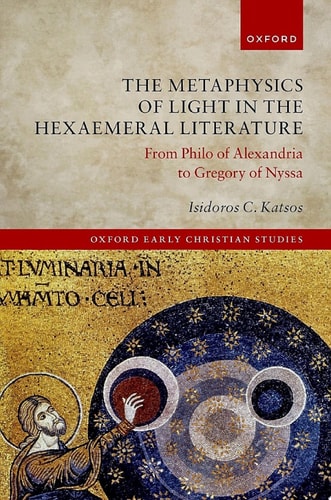
The Metaphysics of Light in the Hexaemeral Literature: From Philo of Alexandria to Gregory of Nyssa
0
0
As an Amazon Associate and affiliate partner, Menrva Books earns from qualifying purchases. Learn more
Author Description
This volume critically re-evaluates the received interpretation of the nature of light in the ancient sources. Isidoros C. Katsos contests the prevalent view in the history of optics according to which pre-modernity theorized light as subordinate to sight ('oculocentrism') by examining in depth the contrary textual evidence found in early Christian texts. It shows that, from Philo of Alexandria and Origen to Basil of Caesarea and Gregory of Nyssa, the Jewish-Christian commentary tradition on the hexaemeral literature (the biblical creation narrative) reflected deeply on the nature and physicality of light for the purposes of understanding the structure and purpose of material creation. Contemplation of nature allowed early Christian thinkers to conceptualize light as the explanatory principle of vision rather than subordinated to it. Contrary to the prevalent view, the hexaemeral literature necessitates a 'luminocentric' interpretation of the theory of light of Plato's Timaeus in its reception history in the context of late antique cosmology. Hexaemeral luminocentrism invites the reader of Scripture to grasp not only the sensible properties of light, but also their causal principle as the first manifestation of the divine Logos in creation. The hexaemeral metaphysics thus provides the missing ground of meaning of the early Christian language of light.
Menrva's Summary
THE THESIS
This volume investigates whether early Christian hexaemeral literature supports a 'luminocentric' rather than 'oculocentric' theory of light in late antique cosmology. Isidoros C. Katsos, a scholar in early Christian thought, challenges the traditional historical view that pre-modern optics prioritized sight over the nature of light itself. By analyzing the commentary tradition on the biblical creation narrative, the author argues that thinkers from Philo of Alexandria to Gregory of Nyssa utilized light as a primary explanatory principle for material creation and divine manifestation.
THE SCOPE MAP
What You Will Find
- A re-evaluation of the reception history of Plato's Timaeus within early Christian thought.
- Analysis of the hexaemeral tradition, specifically focusing on Philo of Alexandria, Origen, Basil of Caesarea, and Gregory of Nyssa.
- A philosophical framework defining 'luminocentrism' as a counter-narrative to 'oculocentrism' in ancient optics.
Scope Limits
- The study is restricted to the specific context of early Christian hexaemeral literature and does not provide a comprehensive history of all ancient optical theories.
THE AUTHORITY PERSPECTIVE
Scholars in the field of patristics and ancient philosophy recognize this work as a rigorous intervention in the history of optics and cosmology. Readers frequently note the academic density of the prose, which requires a strong background in both classical philosophy and early Christian theology to fully grasp the author's arguments.
Page Count:
260
Publication Date:
2023-01-01
Publisher:
OUP Oxford
ISBN-10:
0192695878
ISBN-13:
9780192695871
History
Philosophy
Religion
Cosmology
Theology
Bible
Metaphysics
Community Tags
Similar Books