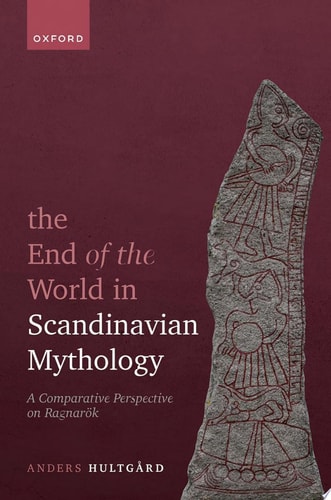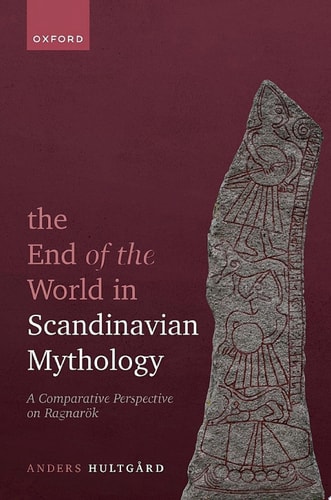
The End of the World in Scandinavian Mythology: A Comparative Perspective on Ragnarök
0
0
As an Amazon Associate and affiliate partner, Menrva Books earns from qualifying purchases. Learn more
Author Description
The End of the World in Scandinavian Mythology is a detailed study of the Scandinavian myth on the end of the world, the Ragnarök, and its comparative background.The Old Norse texts on Ragnarök, in the first place the 'Prophecy of the Seeress' and the Prose Edda of the Icelander Snorri Sturluson, are well known and much discussed. However, Anders Hultgård suggests that it is worthwhile to reconsider the Ragnarök myth and shed new light on it using new comparative evidence, and presenting texts in translation that otherwise are available only to specialists. The intricate question of Christian influence on Ragnarök is addressed in detail, with the author arriving at the conclusion of an independent pre-Christian myth with the closest analogies in ancient Iran.People in modern society are concerned with the future of our world, and we can see these same fears and hopes expressed in many ancient religions, transformed into myths of the future including both cosmic destruction and cosmic renewal. The Ragnarök myth can be said to be the classical instance of such myths, making it more relevant today than ever before.
Menrva's Summary
THE THESIS
This study investigates the origins and comparative context of the Ragnarök myth to determine the extent of external influence on Old Norse eschatology. Anders Hultgård, a scholar of Scandinavian religion, utilizes a rigorous comparative methodology to analyze primary Old Norse texts, including the Völuspá and the Prose Edda. By contrasting these sources with ancient Iranian traditions, the author argues for the existence of an independent, pre-Christian mythic structure that predates significant Christian influence.
THE SCOPE MAP
What You Will Find
- Comparative analysis of Old Norse eschatological texts and ancient Iranian religious traditions
- Translations of obscure or specialized source materials regarding cosmic destruction
- Detailed examination of the intersection between pre-Christian myth and later Christian theological motifs
Scope Limits
- The text does not provide a comprehensive history of all Norse deities or social customs
- The analysis focuses primarily on eschatology rather than broader mythological narratives
THE AUTHORITY PERSPECTIVE
Scholars and students of Old Norse mythology frequently cite this work for its meticulous comparative approach and its challenge to traditional theories regarding Christian syncretism. The text is considered a specialized academic resource that provides significant depth for those interested in the structural parallels between ancient world religions.
Page Count:
473
Publication Date:
2022-01-01
Publisher:
OUP Oxford
ISBN-10:
0192692844
ISBN-13:
9780192692849
History
Religion
Scandinavian Studies
Folklore
Mythology
Comparative Mythology
Community Tags
Similar Books