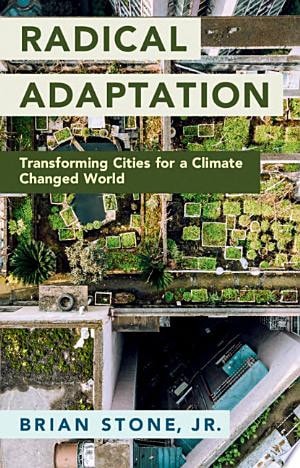
Radical Adaptation: Transforming Cities for a Climate Changed World
0
0
As an Amazon Associate and affiliate partner, Menrva Books earns from qualifying purchases. Learn more
Author Description
This book considers the everyday conduits through which climate instability is revealing itself: the storm sewer drain on your street, the powerlines transporting your electricity, the mix of vegetation in your backyard or neighborhood park - these are the pathways through which climate change is most likely to impact your life. For many, these are the last places we expect it to. The first book to establish a framework for climate change adaptation, Stone's aim is to understand how climate change is altering our lives in the present period - this period of transition between the ancient, stable climate of our ancestors and the unfolding, no longer stable climate of our children - and how our cities might adapt to these changes. Stone's concern is with the risks posed by a new environmental regime for which our modes of living are ill-adapted, and with how these modes of living must be altered - radically altered - to persist in a climate changed world.
Menrva's Summary
THE THESIS
This book investigates how the mundane infrastructure of our cities serves as the primary interface for climate change impacts and proposes a framework for radical adaptation. Brian Stone, an expert in urban environmental planning, examines the immediate and present-day effects of climate instability as revealed through everyday elements like storm drains, power lines, and local vegetation. The book establishes a novel framework for understanding and adapting to a transitional climate period, moving from the stable past to an uncertain future. Stone's central argument focuses on the risks posed by our current, ill-adapted modes of living and advocates for fundamental alterations to ensure urban persistence in a changed world.
THE SCOPE MAP
- Analysis of climate change impacts through urban infrastructure (storm drains, power lines, vegetation).
- A framework for understanding and implementing climate change adaptation strategies.
- Exploration of the transitional period between historical stable climates and future unstable ones.
- Examination of the risks posed by current living modes to urban sustainability.
- Proposals for radical alterations in urban living to ensure persistence.
- Focus on the present-day manifestations of climate instability.
THE AUTHORITY PERSPECTIVE
The book is positioned as a foundational text for understanding and addressing climate change adaptation within urban environments. Its focus on present-day impacts through everyday infrastructure offers a tangible entry point for readers concerned with the immediate realities of a changing climate. The proposed framework for adaptation is presented as a necessary shift from current, unsustainable modes of living. The work aims to equip cities and their inhabitants with the knowledge to fundamentally alter their practices and structures to endure a new environmental regime.
Page Count:
166
Publication Date:
2024-01-18
Publisher:
Cambridge University Press
ISBN-10:
100921117X
ISBN-13:
9781009211178
Non-Fiction
Science
Public Policy
Sustainability
Climate Change
urban planning
Community Tags
Similar Books