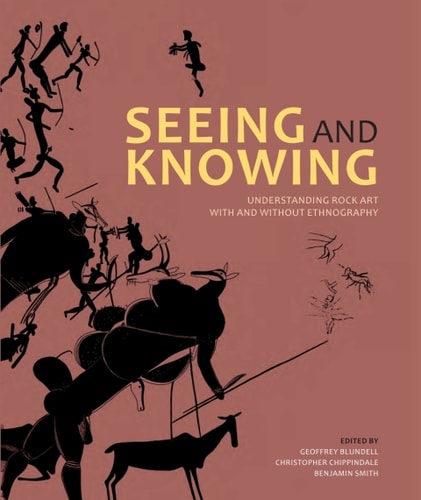
Seeing and Knowing
0
0
As an Amazon Associate and affiliate partner, Menrva Books earns from qualifying purchases. Learn more
Author Description
It is largely through the work of David Lewis-Williams that San rock art has come to be understood so well, as a complex symbolic and metaphoric representation of San religious beliefs and practices. The purpose of this volume is to demonstrate the depth and wide geographical impact of Lewis-Williams’ contribution, with particular emphasis on the use of theory and methodology drawn from ethnography that he has used with inspirational effect in understanding the meaning and context of rock art in various parts of the world. Seeing and Knowing explores how to understand and learn from rock art with and without ethnography. Because many of the chapters are based on solid fieldwork and ethnographic research, they offer a new body of work that provides the evidence for differentiation between knowing and simply seeing. This volume is unique in that it focuses exclusively on rock art and ethnography, and covers such a wide geographic range of examples on this topic, from southern Africa, to Scandinavia, to the United States. Many of the chapters explore studies in rock art regions of the world where variation and constancy can be observed and explored across distances both in space and in time. The editors have entitled the book Seeing and Knowing to echo Lewis-Williams’ Believing and Seeing published almost thirty years ago; they say ‘seeing’ again because looking at rock art is and will always be central, and then what is seen when human eyes and minds look; they say ‘knowing’ in recognition that, by his work and by his example, archaeologists now know a little more than they knew before. Even so, as Lewis-Williams will be the first to say, we still know only a fraction.
Menrva's Summary
THE THESIS
This volume explores the profound impact of David Lewis-Williams' work on understanding San rock art and its broader implications for interpreting rock art globally. The book demonstrates the depth and geographical reach of Lewis-Williams' contributions, particularly his inspirational use of ethnographic theory and methodology. It investigates how to understand and learn from rock art, both with and without ethnographic parallels, presenting new fieldwork and research that differentiates between mere observation and genuine comprehension. The collection spans a wide geographic range, from southern Africa to Scandinavia and the United States, examining variations and constants in rock art across space and time.
THE SCOPE MAP
- Exploration of David Lewis-Williams' theories and methodologies in rock art interpretation.
- Focus on the relationship between rock art and ethnography.
- Case studies from southern Africa, Scandinavia, and the United States.
- Analysis of rock art variations and constants across different regions and time periods.
- Demonstration of how to understand and learn from rock art with and without ethnographic data.
- Evidence for differentiating between 'seeing' and 'knowing' in the context of rock art.
THE AUTHORITY PERSPECTIVE
This collection of essays serves as a testament to the significant influence of David Lewis-Williams on the field of rock art studies, particularly in understanding San rock art through ethnographic lenses. The volume's strength lies in its diverse geographical scope and its focus on the methodological approaches that allow for deeper comprehension beyond simple visual observation. It offers a substantial body of new research grounded in fieldwork and ethnographic inquiry, providing evidence for nuanced interpretations of rock art across cultures and epochs. The book is positioned as a key resource for scholars interested in the intersection of archaeology, ethnography, and the symbolic meanings embedded within ancient visual traditions.
Page Count:
1288
Publication Date:
2010-12-01
Publisher:
WITS University Press
ISBN-10:
1868147169
ISBN-13:
9781868147168
Non-Fiction
Art
History
Archaeology
Art History
Symbolism
Ethnography
Community Tags
Similar Books





Reader Comments
Share Your Thoughts
No comments yet. Be the first to share your thoughts!