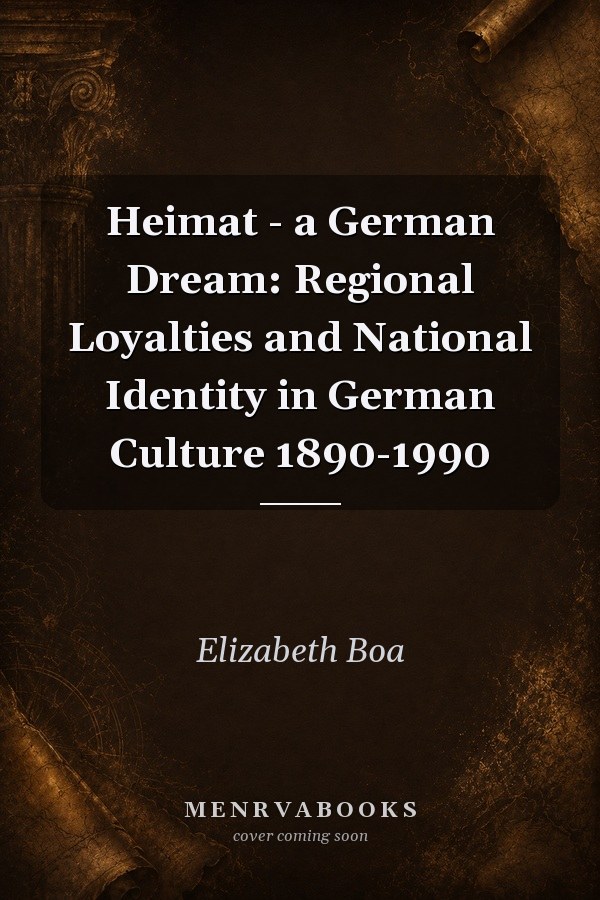
Heimat: A German Dream : Regional Loyalties and National Identity in German Culture, 1890-1990
0
0
As an Amazon Associate and affiliate partner, Menrva Books earns from qualifying purchases. Learn more
Author Description
The discourse of Heimat, meaning homeland or roots, has been a medium of debate on German identity between region and nation for at least a century. Four phases parallel Germany's discontinuous history: Heimat literature as a response to modernization and to regional tensions before the FirstWorld War; the inter-war period when Heimat divided into racist ideology, left-wing opposition, and inner resistance to the Third Reich; a post-war dialectic between escapist 1950s Heimat films and right-wing claims to the lost lands in the East to which anti-Heimat theatre and films in the 1960sand 1970s were a response, with the urban Heimat in GDR films adding a socialist twist; regionalism and green politics in the 1980s and German identity beyond Cold War divisions. A key point of reference in current debates on German history, Heimat looks likely to continue in postmodern andmulticultural mode.
Menrva's Summary
THE THESIS
This book investigates the complex and evolving concept of 'Heimat' (homeland or roots) as a lens through which German identity has been debated between regional loyalties and national consciousness over a century. It examines four distinct historical phases, paralleling Germany's turbulent history from the pre-World War I era of modernization and regional tensions, through the inter-war period's ideological divisions, the post-war dialectic of escapist films and territorial claims, to the regionalism and green politics of the 1980s and beyond the Cold War. The authors draw on literature, film, and theatre to trace how 'Heimat' has been a site of cultural and political contestation, ultimately suggesting its continued relevance in postmodern and multicultural contexts.
THE SCOPE MAP
- Analysis of 'Heimat' literature as a response to modernization and regional tensions before WWI.
- Exploration of the inter-war period's division of 'Heimat' into racist ideology, left-wing opposition, and internal resistance to the Third Reich.
- Examination of the post-war dialectic between escapist 1950s 'Heimat' films and right-wing claims to lost Eastern territories.
- Discussion of anti-'Heimat' theatre and films in the 1960s and 1970s as a response to earlier trends.
- Inclusion of the socialist twist provided by urban 'Heimat' in GDR films.
- Coverage of regionalism and green politics in the 1980s and the concept of German identity beyond Cold War divisions.
- Consideration of 'Heimat' as a key reference point in current debates on German history.
- Speculation on the future of 'Heimat' in postmodern and multicultural modes.
THE AUTHORITY PERSPECTIVE
The book traces the discourse of 'Heimat' as a continuous medium for debating German identity between region and nation over a century, paralleling Germany's discontinuous history. It details how 'Heimat' evolved through distinct phases, from pre-WWI literature to inter-war ideological splits, post-war cinematic and theatrical responses, and the regionalism of the 1980s. The analysis highlights 'Heimat' as a crucial reference point in contemporary discussions of German history, suggesting its ongoing adaptation into postmodern and multicultural forms.
Page Count:
234
Publication Date:
2000-01-01
Publisher:
Oxford University Press
ISBN-10:
0198159226
ISBN-13:
9780198159223
History
Non-Fiction
German Studies
National Identity
Community Tags
Similar Books