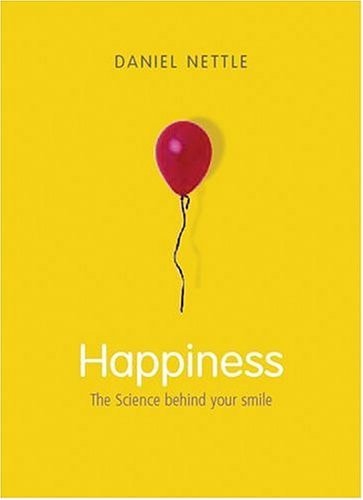
Happiness: The Science behind Your Smile
0
0
As an Amazon Associate and affiliate partner, Menrva Books earns from qualifying purchases. Learn more
Author Description
In a world obsessed by happiness, this is the first book to look thoroughly at what happiness is and how it works. Bringing together the latest insights from psychiatry, psychology, and philosophy, Daniel Nettle sheds brilliant light on this most basic of human desires.Nettle examines whether people are basically happy or unhappy, whether success can make us happy, what sort of remedies to unhappiness work, why some people are happier than others, and much more. The book is packed with fascinating observations. We discover the evolutionary reason why negative thoughts are more powerful than positive ones. We read that happiness varies from country to country--the Swiss are much more happy than Bulgarians. And we learn that, in a poll among people aged 42 years old (peak mid-life crisis time) more than half rated their happiness an 8, 9, or 10 out of 10, and 90% rated it above 5. (Like the children of Lake Wobegon, Nettle quips, pretty much everyone is above average in happiness.) Nettle, a psychologist, is particularly insightful in discussing the brain systems underlying emotions and moods, ranging from serotonin, "the happiness chemical"; to mood enhancing drugs such as D-fenfluramine, which reduces negative thinking in less than an hour; to the part of the brain that, when electrically stimulated, provides feeling of benevolent calm and even euphoria. In the end, Nettle suggests that we would all probably be happier by trading income or material goods for time with people or hobbies. But most people do not do so.Happiness offers a remarkable portrait of the feeling that poets, politicians, and philosophers all agree truly makes the world go round.
Menrva's Summary
THE THESIS
This book investigates the biological, psychological, and philosophical foundations of human happiness to determine what constitutes well-being and why it varies across individuals and cultures. Daniel Nettle, a psychologist, synthesizes research from psychiatry, evolutionary biology, and philosophy to construct a framework for understanding emotional states. He examines the evolutionary advantages of negative versus positive thought patterns and the neurological mechanisms that regulate mood. By analyzing data on global happiness levels and the efficacy of various interventions, Nettle argues that human happiness is a complex interplay of internal brain chemistry and external life circumstances.
THE SCOPE MAP
What You Will Find
- Analysis of brain systems and neurotransmitters like serotonin in emotional regulation
- Cross-cultural comparisons of happiness levels
- Evolutionary explanations for the prevalence of negative thinking
- Evaluation of mood-enhancing interventions and lifestyle choices
Scope Limits
- Does not provide a prescriptive self-help manual for achieving personal happiness
- Does not cover deep clinical pathology or psychiatric treatment protocols in exhaustive detail
THE AUTHORITY PERSPECTIVE
Experts and readers frequently note the accessibility of Nettle's prose, which translates complex neurological and psychological data into clear, readable concepts. The text is widely regarded as a foundational overview for those seeking a scientific perspective on the mechanics of human emotion.
Page Count:
221
Publication Date:
2005-07-01
Publisher:
Oxford University Press
ISBN-10:
0192805584
ISBN-13:
9780192805584
Psychology
Science
Philosophy
Happiness
Self Help
Mental Health
Evolutionary Psychology
Community Tags
Similar Books