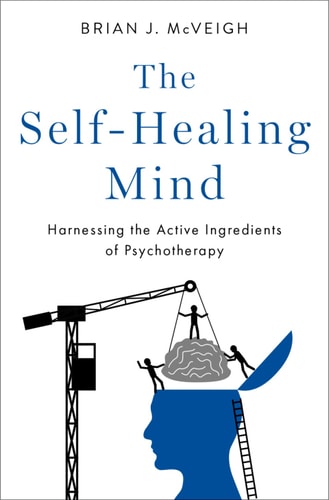
The Self-Healing Mind: Harnessing the Active Ingredients of Psychotherapy
0
0
As an Amazon Associate and affiliate partner, Menrva Books earns from qualifying purchases. Learn more
Author Description
Evolutionary psychology explains why some mental illnesses developed, but to answer questions about how to improve our mental well-being in the face of these challenges--how the mind works to heal itself-we should look to more recent changes in mentality. In The Self-Healing Mind, mental health counsellor and anthropologist Brian J. McVeigh postulates that around 1000 BCE, population expansion and social complexity forced people to learn "conscious interiority"--a package of cognitive capabilities that culturally upgraded mentality. He argues that the mental processes that help us get through the day are the same ones that can heal our psyches. Adopting a common factors and positive psychology perspective, McVeigh enumerates and defines these active ingredients of the self-healing mind: mental space, introception, self-observing and observed, self-narratization, excerption, consilience, concentration, suppression, self-authorization, self-autonomy, and self-reflexivity. McVeigh shows how these capabilities underlie the effectiveness of psychotherapeutic techniques and interventions. Though meta-framing effects of psyche's recuperative properties correct distorted cognition and grant us remarkable adaptive abilities, they sometimes spiral out of control, resulting in runaway consciousness and certain mental disorders. This book also addresses how maladaptive processes snowball and come to need restraint themselves. With insights from counseling, psychotherapy, anthropology, and history, The Self-Healing Mind will appeal to practitioners, researchers, and anyone interested in neurocultural plasticity and how therapeutically-directed consciousness repairs the mind.
Menrva's Summary
THE THESIS
How does the human mind utilize specific cognitive capabilities to facilitate self-repair and mental well-being? Brian J. McVeigh, an anthropologist and mental health counselor, investigates the evolution of "conscious interiority" as a cultural upgrade that occurred around 1000 BCE. By synthesizing evolutionary psychology, anthropology, and clinical practice, the author argues that the same mental processes used for daily functioning serve as the primary mechanisms for psychological healing. He proposes a framework of active ingredients that explain both the effectiveness of psychotherapy and the origins of certain maladaptive mental states.
THE SCOPE MAP
What You Will Find
- A historical analysis of the emergence of conscious interiority in human populations.
- A defined list of eleven active ingredients of the self-healing mind, including introception, self-narratization, and self-reflexivity.
- An examination of how meta-framing effects contribute to both adaptive cognition and runaway consciousness.
- A cross-disciplinary methodology integrating counseling techniques with neurocultural plasticity research.
THE AUTHORITY PERSPECTIVE
Experts and practitioners in the field of mental health recognize this work as a bridge between anthropological history and contemporary psychotherapeutic practice. Readers frequently note the academic density of the prose, which requires a foundational understanding of psychological theory to fully grasp the author's arguments.
Page Count:
339
Publication Date:
2021-01-01
Publisher:
Oxford University Press
ISBN-10:
019764788X
ISBN-13:
9780197647882
Psychology
Psychology Pathological
Evolutionary Psychology
Mental Illness
Anthropology
Self Help
Mental Health
General Anthropology
Positive Psychology
Community Tags
Similar Books