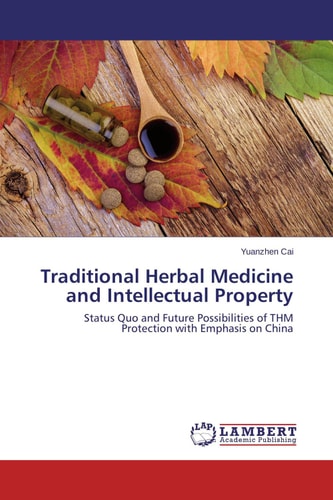
Traditional Herbal Medicine and Intellectual Property: Status Quo and Future Possibilities of THM Protection with Emphasis on China
0
0
As an Amazon Associate and affiliate partner, Menrva Books earns from qualifying purchases. Learn more
Author Description
This book examines a series of issues concerning the intellectual property protection of traditional herbal medicine (THM). Based on the historical and ideological background of THM, it is a widely accepted point of view that THM is receiving stronger protection and public attention in the major areas of the world, due to its economic and moral importance that is highlighted especially from the perspective of developing countries. The core issue of the intellectual property protection of THM lies on the substantive patentability of herbal medicinal products, and may lead to various conclusions when different types of patents and patenting strategies are applied. As a result from the inapplicability, ambiguity and inefficiency of means of IP protection, a seemingly more practical form of protection begins to raise speculation, that is, the essential benefit-sharing and prior informed consent mechanism conceived by the Convention on Biological Diversity.
Menrva's Summary
THE THESIS
This book investigates the complex landscape of intellectual property (IP) protection for Traditional Herbal Medicine (THM), with a particular focus on China. It delves into the historical and ideological underpinnings of THM, acknowledging its growing global recognition and economic significance, especially for developing nations. The central challenge explored is the substantive patentability of herbal medicinal products, examining how different patent types and strategies yield varied outcomes. The work also considers the limitations of existing IP frameworks and introduces the essential benefit-sharing and prior informed consent mechanisms derived from the Convention on Biological Diversity as potential alternative protection methods.
THE SCOPE MAP
- Analysis of the historical and ideological background of Traditional Herbal Medicine (THM).
- Examination of the economic and moral importance of THM, particularly from a developing country perspective.
- Discussion on the substantive patentability of herbal medicinal products and its challenges.
- Evaluation of various patent types and patenting strategies applicable to THM.
- Assessment of the inapplicability, ambiguity, and inefficiency of current IP protection means.
- Exploration of essential benefit-sharing and prior informed consent mechanisms as alternative protection models.
- Emphasis on the status quo and future possibilities of THM protection with a specific focus on China.
THE AUTHORITY PERSPECTIVE
The book addresses a critical intersection of traditional knowledge, global health, and intellectual property law. Its focus on China provides a specific case study within the broader context of developing nations seeking to protect their traditional medicinal resources. The examination of patentability challenges and alternative mechanisms like benefit-sharing suggests a forward-looking approach to safeguarding cultural heritage and economic interests in the realm of herbal medicine.
Page Count:
100
Publication Date:
2015-03-16
Publisher:
LAP LAMBERT Academic Publishing
ISBN-10:
3659663107
ISBN-13:
9783659663109
Non-Fiction
Science
Politics
Intellectual Property
Global Health
China
Herbal Medicine
Law
Community Tags
Similar Books