The Last Great Quest
0
0
As an Amazon Associate and affiliate partner, Menrva Books earns from qualifying purchases. Learn more
Author Description
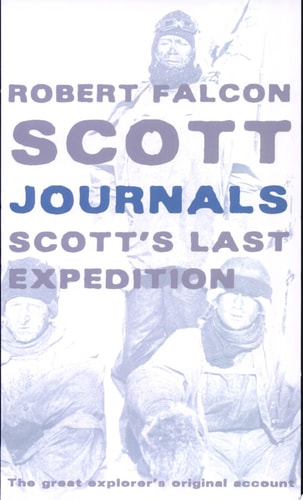
Scott's last Antarctic expedition is one of the great adventure stories of the twentieth century. On 1 November 1911, a British team set out on the gruelling 800-mile journey across the coldest and highest continent on Earth to travel to the South Pole. Five men battled through unimaginably harsh conditions only to find the Norwegian flag had been planted at the Pole just weeks before. Captain Robert Falcon Scott, Lieutenant Henry Bowers, Petty Officer Edgar Evans, Captain Lawrence Oates, and Dr. Edward Wilson all died on the return trek, starved and frozen to death, only eleven miles from a supply camp. In November 1912, a rescue party discovered their last letters and diaries, which told a story of bravery, hardship, and self-sacrifice that shocked the world. Recent decades have seen controversy rage over whether Scott was the last of a line of great Victorian explorers, intent on discovering uncharted lands, or a hopeless incompetent driven by personal ambition. Rejecting the stereotypes, Max Jones reveals a complex figure, a product of the passions and preoccupations of an imperial age. He also shows how heroes are made and manipulated, through a close examination of the unprecedented outpouring of public grief at the news of the death of Scott and his companions. Max Jones uses fascinating new evidence and prevously unseen illustrations to take us back to this remarkable moment in modern history, and tells for the first time the full story of The Last Great Quest.
Menrva's Summary
THE THESIS
This book investigates the historical legacy of Captain Robert Falcon Scott’s final Antarctic expedition and the subsequent construction of his public image as a national hero. Max Jones, a historian specializing in the cultural history of exploration, utilizes primary source materials including diaries, letters, and contemporary media reports to re-evaluate Scott’s leadership. The work argues that Scott was neither a purely heroic Victorian archetype nor a simple failure, but rather a complex figure shaped by the specific imperial anxieties and cultural values of early twentieth-century Britain.
THE SCOPE MAP
What You Will Find
- A detailed account of the 1911-1912 British Antarctic expedition.
- An analysis of the public reaction and media coverage following the death of the expedition members.
- Examination of previously unseen illustrations and archival documents.
Scope Limits
- The book does not focus on the technical or scientific findings of the expedition itself.
- It does not provide a comprehensive biography of Scott’s entire life, focusing primarily on the final expedition and its aftermath.
THE AUTHORITY PERSPECTIVE
Historians and reviewers frequently praise the text for its nuanced approach to the myth-making process surrounding the expedition. Experts highlight this as a significant contribution to the study of how national identity is projected onto historical figures.
Page Count:
400
Publication Date:
2004-06-01
Publisher:
Oxford University Press M.D.
ISBN-10:
0192805703
ISBN-13:
9780192805706
Travel
Non-Fiction
History
Biography
Exploration
Antarctica
Community Tags
Other Editions(2)
Similar Books