The Hitler Myth: Image and Reality in the Third Reich
0
0
As an Amazon Associate and affiliate partner, Menrva Books earns from qualifying purchases. Learn more
Author Description
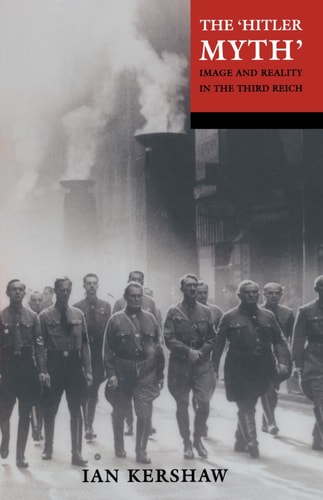
Few, if any, twentieth-century political leaders have enjoyed greater popularity among their own people than Hitler did in the decade or so following his rise to power in 1933. The personality of Hitler himself, however, can scarcely explain this immense popularity or his political effectiveness in the 1930s and '40s. His hold over the German people lay rather in the hopes and perceptions of the millions who adored him.Based largely on the reports of government officials, party agencies, and political opponents, Ian Kershaw's groundbreaking study charts the creation, growth, and decline of the "Hitler myth." He demonstrates how the manufactured "Fuhrer-cult" served as a crucial integrating force within the Third Reich and a vital element in the attainment of Nazi political aims. Masters of the new techniques of propaganda, the Nazis used "image-building" to exploit the beliefs, phobias, and prejudices of the day. Kershaw greatly enhances our understanding of the German people's attitudes and behavior under Nazi rule and the psychology behind their adulation of Hitler.
Menrva's Summary
THE THESIS
This study investigates how the manufactured image of Adolf Hitler, rather than his personal attributes, functioned as a primary mechanism for political integration and public support within the Third Reich. Ian Kershaw, a prominent historian of modern Germany, utilizes a vast array of primary source documentation to analyze the discrepancy between the reality of the Nazi regime and the public perception of its leader. By examining the intersection of state-sponsored propaganda and popular sentiment, the author constructs a framework that explains the psychological and social foundations of the Fuhrer-cult.
THE SCOPE MAP
What You Will Find
- Analysis of the creation, dissemination, and eventual erosion of the Hitler myth.
- Examination of the role of propaganda in shaping public opinion and national identity.
- Synthesis of reports from government officials, party agencies, and political opponents.
Scope Limits
- The text does not provide a comprehensive biography of Hitler's personal life or private habits.
- It does not focus on military strategy or the tactical progression of World War II.
THE AUTHORITY PERSPECTIVE
Historians frequently cite this work as a foundational text for understanding the social history of the Third Reich and the mechanics of totalitarian propaganda. Readers often note the academic density of the prose, which provides a rigorous examination of the relationship between the regime and the German populace.
Page Count:
320
Publication Date:
2001-12-13
Publisher:
Oxford University Press
ISBN-10:
0192802062
ISBN-13:
9780192802064
Biography
History
Nazi Germany
European History
Community Tags
Other Editions(3)

Similar Books