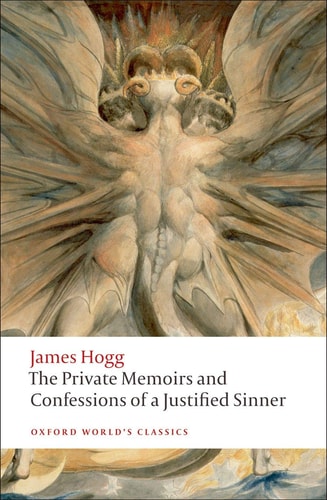
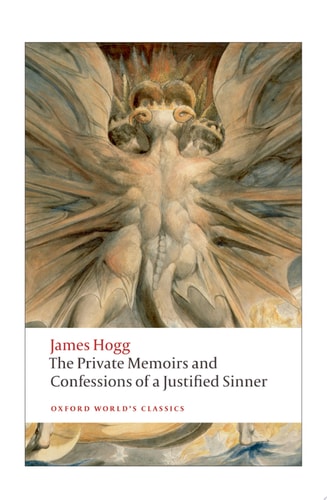
The Private Memoirs and Confessions of a Justified Sinner
0
0
As an Amazon Associate and affiliate partner, Menrva Books earns from qualifying purchases. Learn more
Author Description
One of the supreme masterpieces of Romantic fiction and Scottish literature, The Private Memoirs and Confessions of a Justified Sinner is a terrifying tale of murder and amorality, and of one man's descent into madness and despair. James Hogg's sardonic novel follows a young man who, falling under the spell of a mysterious stranger who bears an uncanny likeness to himself, embarks on a career as a serial murderer. The memoirs are presented by a narrator whose attempts to explain the story only succeed in intensifying its more baffling and bizarre aspects. Is the young man the victim of a psychotic delusion, or has he been tempted by the devil to wage war against God's enemies? The authoritative and lively introduction by Ian Duncan covers the full range of historical and religious themes and contexts, offers a richer and more accurate consideration of the novel's relation to Romantic fiction than found elsewhere, and sheds new light on the novel's treatment of fanaticism. Copious notes identify the novel's historical, biblical, theological, and literary allusions.
Menrva's Summary
THE PULSE
A young man, convinced of his divine election, descends into a series of calculated murders under the influence of a mysterious, doppelgänger-like stranger. Robert Wringhim, a religious zealot, believes his status as a 'justified sinner' grants him immunity from moral consequence. He is guided by a sinister figure named Gil-Martin, who encourages his violent impulses against those deemed enemies of his faith. The narrative framework is complex, utilizing a dual-perspective structure that contrasts an objective editorial account with the subjective, increasingly erratic memoirs of the protagonist himself. This structure forces the reader to navigate the tension between theological fanaticism and psychological fragmentation.
INSIDE THE PAGES
- Dual-narrative structure contrasting editorial distance with personal confession
- Exploration of religious antinomianism and fanaticism
- Use of the doppelgänger motif to represent internal moral conflict
- Satirical critique of Scottish Calvinist orthodoxy
- Unreliable narration that obscures the boundary between supernatural intervention and psychosis
- Gothic atmosphere set within the landscape of 18th-century Scotland
- Examination of the intersection between predestination and individual agency
- Complex interplay of theological, biblical, and literary allusions
THE COLLECTIVE ECHO
Readers and critics frequently highlight the novel's ahead-of-its-time approach to psychological complexity and the unreliable narrator. Discussion often centers on the ambiguity of the antagonist, questioning whether Gil-Martin represents a literal demonic entity or a manifestation of the protagonist's fractured psyche. The pacing is noted for its shift from a detached historical account to a claustrophobic, intense personal descent into madness. Scholars often emphasize the work's biting satire of religious hypocrisy and its significant influence on the development of the Gothic genre. The text remains a subject of intense academic interest due to its layered, multi-vocal construction and its enduring relevance to themes of moral absolutism.
Page Count:
296
Publication Date:
1982-08-26
Publisher:
Oxford University Press
ISBN-10:
0192815563
ISBN-13:
9780192815569
Horror
Satire
Psychological
classic
Gothic
Scottish literature
Scotland
Community Tags
Other Editions(6)


Similar Books


Reader Comments
Share Your Thoughts
No comments yet. Be the first to share your thoughts!