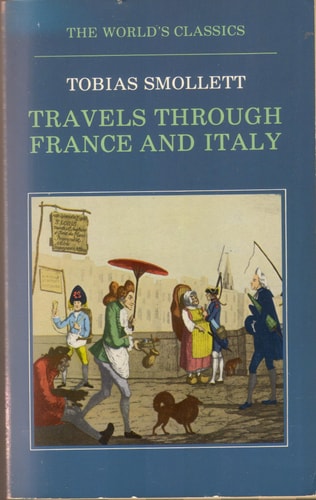
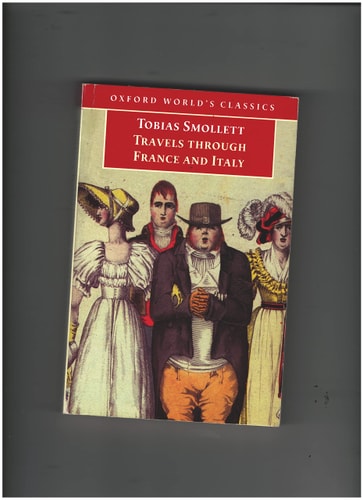
Travels Through France and Italy
0
0
As an Amazon Associate and affiliate partner, Menrva Books earns from qualifying purchases. Learn more
Author Description
Many pens have been burnished this year of grace for the purpose of celebrating with befitting honour the second centenary of the birth of Henry Fielding; but it is more than doubtful if, when the right date occurs in March 1921, anything like the same alacrity will be shown to commemorate one who was for many years, and by such judges as Scott, Hazlitt, and Charles Dickens, considered Fielding's complement and absolute co-equal (to say the least) in literary achievement. Smollett's fame, indeed, seems to have fallen upon an unprosperous curve. The coarseness of his fortunate rival is condoned, while his is condemned without appeal. Smollett's value is assessed without discrimination at that of his least worthy productions, and the historical value of his work as a prime modeller of all kinds of new literary material is overlooked. Consider for a moment as not wholly unworthy of attention his mere versatility as a man of letters.
Menrva's Summary
THE THESIS
This work investigates the cultural, social, and physical landscape of 18th-century France and Italy through the critical lens of a traveling British physician. Tobias Smollett, a prominent novelist and man of letters, documents his health-seeking excursion across the continent. He employs a framework of sharp observation and social critique to evaluate the customs, medical practices, and political structures of the regions he visits. The text serves as both a personal account of his recovery and a commentary on the European societies of the Enlightenment era.
THE SCOPE MAP
What You Will Find
- Detailed observations of 18th-century French and Italian social hierarchies
- Critiques of local medical practices and sanitation standards
- Descriptions of regional architecture, art, and cultural customs
Scope Limits
- The text does not provide a comprehensive historical survey of the regions
- It does not offer objective or neutral reporting, as it is heavily colored by the author's personal grievances and health struggles
THE AUTHORITY PERSPECTIVE
Scholars often note the text's significance as a primary source for understanding the 18th-century British perspective on continental Europe. Critics frequently highlight the author's cantankerous tone as a defining feature that distinguishes this work from more idealized travelogues of the period.
Page Count:
512
Publication Date:
1982-08-26
Publisher:
Oxford University Press
ISBN-10:
0192815695
ISBN-13:
9780192815699
Non-Fiction
Travel Writing
18th century
European History
France
Description and travel
Travelogue
Community Tags
Other Editions(11)



Similar Books











Reader Comments
Share Your Thoughts
No comments yet. Be the first to share your thoughts!