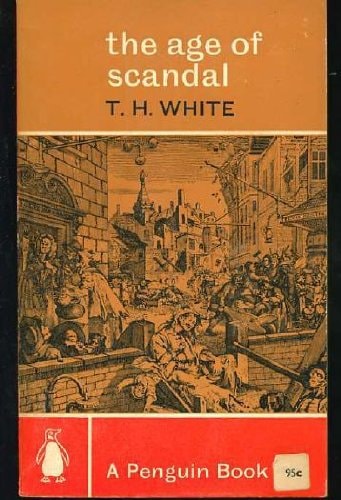
The Age of Scandal
0
0
As an Amazon Associate and affiliate partner, Menrva Books earns from qualifying purchases. Learn more
Author Description
"Between the Classical and the Romantic movements...there existed this other age, which was one of peculiar flavour," writes T.H. White, author of the classic children's novel The Sword in the Stone and numerous other tales of Arthurian bravery. In The Age of Scandal, first published in 1950, White focuses on the period in late 18th-century England that followed the Age of Reason--a period characterized by dilettantism, material comfort, and eccentricity. The literary sway of Swift, Pope, and Dr. Johnson had by then given way to a more aristocratic set of literati, of whom Horace Walpole, writing from the house he had christened Strawberry Hill, was the most splendid and eloquent example. Walpole and his contemporaries "were among the first people in England to be apprehended as personalities," writes White. "Eccentric, individual, sentimental, dramatic, [and] tearful," they were lovers of gossip, fashion, and exhibitionistic behavior. Among the most colorful figures of the age were Selwyn, a famed execution-goer; Beckford, who built an astonishing tower at Fronthill; and Joanna Southcott, remembered for her shocking announcement that she would give birth to the new Messiah.Based on writings by Horace Walpole and other literate recorders of the age, T.H. White has constructed a "little scrapbook of a nostalgic Tory." Here is the fascinating record of another period of literary history by one of the best-loved writers of our own. White describes the eccentricities of the 18th-century Royal Family, the fashions of the nobility--the powdering of wigs, eating and drinking, medicine, birthday parties and theater-going, and English pronunciation; attitudes toward religion and sport; and, above all, the outgageous gossip that circulated in literary circles. A witty, idiosyncratic, audacious portrait of an aristocracy on the wane, The Age of Scandal stands as an entertaining, authoritative description of the late 18th-century English literati.
Menrva's Summary
THE THESIS
This work investigates the cultural and social idiosyncrasies of late 18th-century England, a period defined by the transition between the Age of Reason and the Romantic movement. T.H. White, a noted author of Arthurian fiction, utilizes his background in historical narrative to synthesize the writings of Horace Walpole and other contemporary observers. He presents a framework that highlights the shift toward aristocratic individualism, eccentricity, and the rise of personality-driven social circles in Georgian England.
THE SCOPE MAP
What You Will Find
- Analysis of late 18th-century English aristocratic social customs and fashions.
- Examination of the lives and eccentric behaviors of figures like Horace Walpole, George Selwyn, and Joanna Southcott.
- Commentary on the evolution of English literary culture following the era of Swift and Pope.
- Observations on 18th-century attitudes toward religion, sport, and medicine.
Scope Limits
- The text does not provide a comprehensive political or economic history of the period.
- It focuses primarily on the upper-class literati rather than the broader population of England.
THE AUTHORITY PERSPECTIVE
Readers and critics often note the witty, idiosyncratic tone of White's prose, which prioritizes character sketches over dry academic analysis. Experts recognize the book as a specialized, nostalgic look at a specific social milieu rather than a standard historical survey.
Page Count:
256
Publication Date:
1987-03-12
Publisher:
Oxford University Press
ISBN-10:
0192819488
ISBN-13:
9780192819482
Biography
History
Social History
Literary History
Great Britain
Scandals
18th century
British History
Community Tags
Similar Books