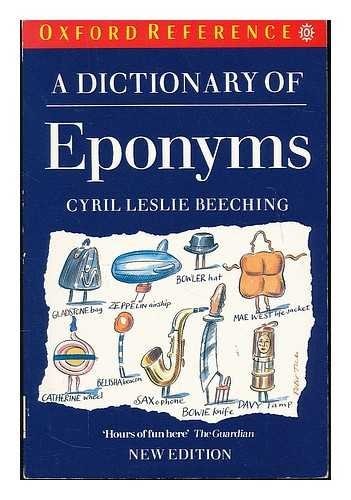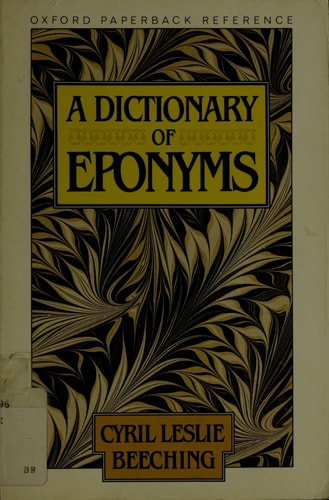
A Dictionary of Eponyms
0
0
As an Amazon Associate and affiliate partner, Menrva Books earns from qualifying purchases. Learn more
Author Description
The English language contains a large number of eponymic words--words derived from the names of people because of their close association with the product, service, or concept. Eponymic words fall into three categories: those derived from mythological or fictitious names; those which describe the person or his works (as, for example Shakespearian or Shavian); and the "true" eponymic words which come from the names of people who actually exist or once existed.This lively, compact, and entertaining reference book presents four hundred "true" eponyms that cover virtually every field of human activity, originating from a vast cross-section of foreign, as well as English, names. Cyril Leslie Beecher, the compiler of the dictionary, informs us that the term "ampere" comes from the name of the French scientist, André Marie Ampère; that the "cardigan" gets its name from James Thomas Brudenell, the seventh Earl of Cardigan; that the "zeppelin" comes from the name of a German soldier and airship designer and manufacturer, Count Ferdinand von Zeppelin; and the list goes on. A short account of the originator's history and claim to this unusual form of immortality accompanies the definition for each word. The dictionary also includes a subject index which enables readers to satisfy their curiosity about specific areas. Presenting a wide variety of eponymic words whose human association makes them particularly fascinating, this highly readable and comprehensive dictionary provides the perfect opportunity for browsing and obtaining a vast amount of unusual information.
Menrva's Summary
THE THESIS
This reference work investigates the etymological origins of four hundred eponyms, exploring how specific individuals have become immortalized through the adoption of their names into the English language. Cyril L. Beeching compiles historical accounts for each entry, categorizing these terms based on their derivation from real-world figures. The text serves as both a functional dictionary and a historical survey of the human associations behind common vocabulary.
THE SCOPE MAP
What You Will Find
- Definitions and historical biographies for four hundred true eponyms.
- Categorization of eponymic words including mythological, descriptive, and historical origins.
- A comprehensive subject index for cross-referencing specific fields of human activity.
Scope Limits
- The text focuses primarily on "true" eponyms derived from real people rather than purely fictional or mythological entities.
- The volume is limited to four hundred entries and does not claim to be an exhaustive list of every eponym in the English language.
THE AUTHORITY PERSPECTIVE
Readers frequently note the accessible and engaging prose style, which makes the dictionary suitable for casual browsing rather than strictly academic research. Experts highlight this as a useful, compact resource for those interested in the intersection of history and linguistics.
Page Count:
224
Publication Date:
1988-10-27
Publisher:
Oxford University Press
ISBN-10:
0192821563
ISBN-13:
9780192821560
Non-Fiction
Etymology
Linguistics
Reference
Dictionaries