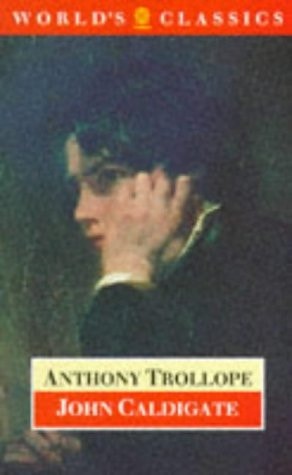
John Caldigate
0
0
As an Amazon Associate and affiliate partner, Menrva Books earns from qualifying purchases. Learn more
Author Description
John Caldigate (1879) possesses in abundance the virtues of Trollope's writing: an engrossing story told by a worldly-wise, kindly, fair-minded narrator, and a tale strong on what Trollope claimed as the leading feature of his novels, "real" characters. But John Caldigate has some striking and distinctive calls on the reader's attention: Australian gold-mining scenes, the prominence given to matters of law and a criminal trial, and the stronger than usual attack on religious fanaticism. Moreover, the main character is accused of and standing trial for bigamy on the testimony of his former mistress.
Menrva's Summary
THE PULSE
A young man finds his reputation and marriage threatened when he is accused of bigamy based on the testimony of a former mistress from his past in the Australian goldfields. John Caldigate returns to England from Australia with a fortune and marries the woman he loves, only to have his life upended by a legal challenge regarding the validity of a previous union. He must navigate the rigid social structures of Victorian England while defending his character against accusations that jeopardize his standing and his family's future. The narrative employs a third-person omniscient perspective to examine the interplay between personal morality and the letter of the law. The protagonist faces intense scrutiny from his community, forcing him to rely on his own integrity and the support of his allies to survive the impending trial.
INSIDE THE PAGES
- Detailed depiction of Australian gold-mining life
- Extensive focus on Victorian legal proceedings and criminal trial mechanics
- Critical examination of religious hypocrisy and fanaticism
- Exploration of the social consequences of scandal
- Character-driven narrative focusing on reputation and honor
- Realistic dialogue reflecting Victorian social norms
- Multi-layered plot involving international settings
- Commentary on the nature of evidence and testimony
THE COLLECTIVE ECHO
Readers and critics often note that this work represents a departure from the author's more domestic narratives by incorporating significant legal and colonial elements. Discussion frequently centers on the effectiveness of the courtroom scenes and the author's ability to maintain suspense regarding the protagonist's guilt or innocence. Many highlight the sharp critique of religious hypocrisy as a standout feature that adds depth to the social commentary. The balance between character development and the procedural aspects of the trial is frequently praised for its realism and attention to detail. Readers appreciate the narrator's fair-minded tone, which allows for a nuanced exploration of the ethical dilemmas presented throughout the story.
Page Count:
656
Publication Date:
1993-09-02
Publisher:
Oxford University Press
ISBN-10:
0192828177
ISBN-13:
9780192828170
Romance
Victorian
Social Commentary
England
Legal Drama
Classic Literature