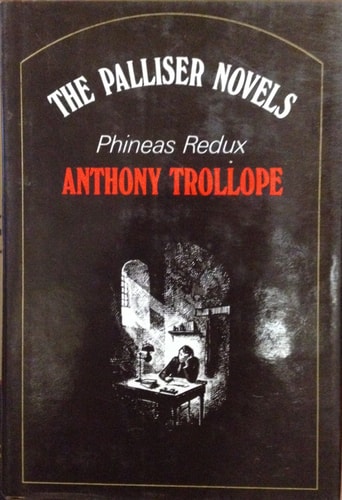
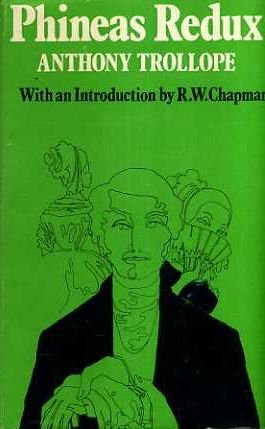
Phineas Redux
0
0
As an Amazon Associate and affiliate partner, Menrva Books earns from qualifying purchases. Learn more
Author Description
In the fourth of the 'Palliser' stories, Trollope follows Phineas Finn's return to the dangerous world of Westminster politics. When his political rival is murdered, Phineas is thrown under suspicion and eventually finds himself standing trial at the Old Bailey. The situation is complicated by the presence of two women in his his old flame Lady Laura, whose estranged husband is determined to destroy Phineas's reputation, and the wealthy and enimgatic widow, Madame Max.
Menrva's Summary
THE PULSE
Phineas Finn returns to the volatile arena of Westminster politics, only to find himself the prime suspect in the murder of a political rival. Phineas must navigate the treacherous social and political landscape of Victorian London while attempting to clear his name of a capital crime. His objective is to survive the legal proceedings at the Old Bailey and restore his reputation, which is actively being dismantled by his enemies. The narrative follows his interactions with Lady Laura and Madame Max, whose conflicting loyalties and personal agendas complicate his defense. The story is presented through a third-person omniscient perspective that emphasizes the rigid social hierarchies and legal constraints of the era.
INSIDE THE PAGES
- Detailed examination of Victorian parliamentary procedures
- Exploration of the intersection between private reputation and public scandal
- Intricate character studies of the British political elite
- Legal procedural elements centered on the Old Bailey trial
- Focus on the social dynamics of the landed gentry
- Nuanced portrayal of romantic and platonic loyalties
- Satirical commentary on the nature of political ambition
- Pacing that balances courtroom tension with social observation
THE COLLECTIVE ECHO
Readers and critics frequently highlight the balance between the high-stakes murder mystery and the meticulous social commentary that defines the work. Discussion often centers on the development of Phineas Finn as a protagonist who must confront the consequences of his past choices in a changing political climate. Many observers note that the prose captures the specific anxieties of the Victorian era with precision and depth. The effectiveness of the courtroom scenes is often praised for providing a grounded contrast to the more abstract political maneuvering found elsewhere in the narrative. Readers frequently emphasize that the book serves as a significant study of character integrity within a system prone to corruption and gossip.
Page Count:
370
Publication Date:
1973-01-01
Publisher:
Oxford University Press
ISBN-10:
0192546147
ISBN-13:
9780192546142
Mystery
Political fiction
Classic Literature
London England
Widowers fiction
Dublin Ireland
Palliser Plantagenet Fictitious character -- Fiction
Victorian
Ireland fiction
Legal Drama
Fiction political
England
Legislators
Community Tags
Other Editions(26)
Creative Media Partners, LLC
2025
Default edition
Repro India Limited
2024
Creative Media Partners, LLC
2019

CreateSpace Independent Publishing Platform
2018
CreateSpace Independent Publishing Platform
2018

BoD – Books on Demand
2018

Barnes & Noble Press
2017
CreateSpace Independent Publishing Platform
2017
CreateSpace Independent Publishing Platform
2017

CreateSpace Independent Publishing Platform
2017
CreateSpace Independent Publishing Platform
2017
CreateSpace Independent Publishing Platform
2017
CreateSpace Independent Publishing Platform
2017

CreateSpace Independent Publishing Platform
2016

CreateSpace Independent Publishing Platform
2016

CreateSpace Independent Publishing Platform
2015

CreateSpace Independent Publishing Platform
2015
CreateSpace Independent Publishing Platform
2015
CreateSpace Independent Publishing Platform
2014
Oxford University Press
2011

OUP Oxford
2011

Nuvision Publications
2004

Oxford University Press
1983
Oxford University Press
1973
Oxford University Press
1972

1900
Similar Books









Reader Comments
Share Your Thoughts
No comments yet. Be the first to share your thoughts!