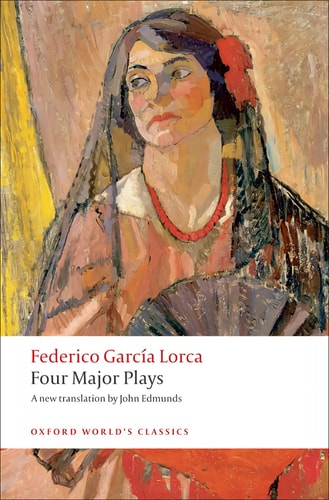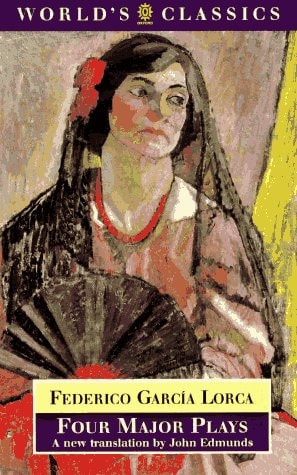
Four Major Plays
0
0
As an Amazon Associate and affiliate partner, Menrva Books earns from qualifying purchases. Learn more
Author Description
In his four last plays (Blood Wedding, Yerma, The House of Bernarda Alba, Dona Rosita the Spinster) Federico García Lorca offered his disturbed and disturbing personal vision to Spanish audiences of the 1930s---unready, as he thought them, for the sexual frankness and surreal expression of his more experimental work. The authentic sense of danger of Lorca's theatre is finely conveyed here in John Edmunds's fluent and rhythmic new translations that lend themselves admirably to performance.
Menrva's Summary
THE PULSE
Federico García Lorca explores the collision between individual desire and the suffocating constraints of traditional Spanish social structures. Across these four plays, protagonists struggle against rigid societal expectations, patriarchal authority, and the crushing weight of repression. The narrative framework utilizes poetic dialogue and surrealist imagery to externalize the internal psychological turmoil of characters trapped in rural environments. These works examine the inevitable conflict between human passion and the destructive forces of honor, duty, and social convention.
INSIDE THE PAGES
- Use of lyrical, rhythmic prose that emphasizes the musicality of the Spanish language.
- Integration of surrealist elements to heighten the atmosphere of impending tragedy.
- Focus on the domestic sphere as a site of intense psychological confinement.
- Exploration of the tension between fertility and sterility in rural life.
- Incorporation of traditional folk motifs and songs to ground the narrative in cultural reality.
- Examination of the role of women within restrictive, honor-bound societies.
- Deployment of symbolic objects to represent repressed desires and societal judgment.
- Emphasis on the inevitability of fate and the destructive power of social shame.
THE COLLECTIVE ECHO
Readers and critics frequently note the visceral intensity of Lorca's dramatic vision, which balances stark realism with haunting, dreamlike sequences. Discussion often centers on the playwright's ability to transform local Spanish customs into universal explorations of human suffering and sexual repression. Scholars highlight the effectiveness of the translation in maintaining the rhythmic cadence necessary for theatrical performance. Many readers emphasize the lingering sense of unease created by the author's unflinching look at the consequences of social conformity. The collection is widely regarded as a primary entry point for understanding the thematic preoccupations of twentieth-century Spanish drama.
Page Count:
280
Publication Date:
2000-01-01
Publisher:
Oxford University Press
ISBN-10:
0192823701
ISBN-13:
9780192823700
Drama
Classic Literature
Tragedy
Dramatic works
Surrealism
Spanish literature
Plays