Discourse on the Origin of Inequality
0
0
As an Amazon Associate and affiliate partner, Menrva Books earns from qualifying purchases. Learn more
Author Description
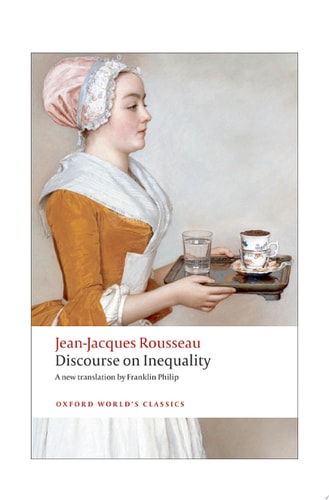
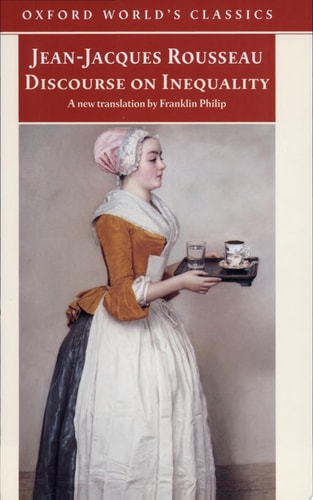
In his Discourses (1755), Rousseau argues that inequalities of rank, wealth, and power are the inevitable result of the civilizing process. If inequality is intolerable - and Rousseau shows with unparalledled eloquence how it robs us not only of our material but also of our psychological independence - then how can we recover the peaceful self-sufficiency of life in the state of nature? We cannot return to a simpler time, but measuring the costs of progress may help us to imagine alternatives to the corruption and oppressive conformity of modern society. Rousseau's sweeping account of humanity's social and political development epitomizes the innovative boldness of the Englightment, and it is one of the most provocative and influential works of the eighteenth century. This new translation includes all Rousseau's own notes, and Patrick Coleman's introduction builds on recent key scholarship, considering particularly the relationship between political and aesthetic thought.
Menrva's Summary
THE THESIS
Rousseau investigates whether the development of civil society and the progress of human knowledge have fundamentally corrupted the natural equality and moral integrity of humanity. Rousseau, a central figure of the Enlightenment, utilizes a hypothetical reconstruction of human history to argue that the transition from a state of nature to organized society introduced artificial inequalities. He posits that the invention of private property and the subsequent establishment of laws served to solidify these disparities, ultimately alienating individuals from their authentic selves.
THE SCOPE MAP
What You Will Find
- A philosophical inquiry into the origins of social hierarchy and wealth disparity.
- A critique of the civilizing process and its impact on human psychological independence.
- A historical framework contrasting the state of nature with modern political structures.
Scope Limits
- The text does not provide a practical political manual for governance.
- It does not offer a literal historical account of human evolution, but rather a speculative philosophical narrative.
THE AUTHORITY PERSPECTIVE
Scholars and historians regard this work as a foundational text in political philosophy that significantly influenced modern social contract theory. Readers frequently note the dense, argumentative nature of the prose, which requires careful engagement with eighteenth-century intellectual contexts.
Page Count:
176
Publication Date:
2000-01-01
Publisher:
Oxford Univ Pr
ISBN-10:
0192839810
ISBN-13:
9780192839817
Non-Fiction
Philosophy
Enlightenment
Social Theory
Community Tags
Similar Books