Discourse on the Origin of Inequality
0
0
As an Amazon Associate and affiliate partner, Menrva Books earns from qualifying purchases. Learn more
Author Description
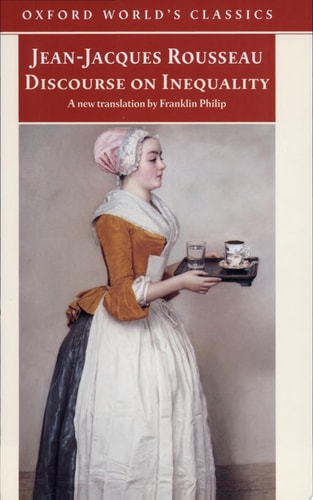
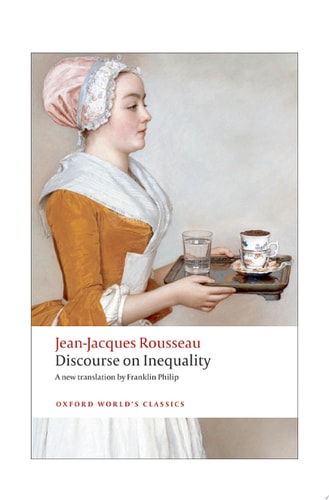
In his Discourses (1755), Rousseau argues that inequalities of rank, wealth, and power are the inevitable result of the civilizing process. If inequality is intolerable - and Rousseau shows with unparalledled eloquence how it robs us not only of our material but also of our psychological independence - then how can we recover the peaceful self-sufficiency of life in the state of nature? We cannot return to a simpler time, but measuring the costs of progress may help us to imagine alternatives to the corruption and oppressive conformity of modern society. Rousseau's sweeping account of humanity's social and political development epitomizes the innovative boldness of the Englightment, and it is one of the most provocative and influential works of the eighteenth century. This new translation includes all Rousseau's own notes, and Patrick Coleman's introduction builds on recent key scholarship, considering particularly the relationship between political and aesthetic thought. ABOUT THE SERIES: For over 100 years Oxford World's Classics has made available the widest range of literature from around the globe. Each affordable volume reflects Oxford's commitment to scholarship, providing the most accurate text plus a wealth of other valuable features, including expert introductions by leading authorities, helpful notes to clarify the text, up-to-date bibliographies for further study, and much more.
Menrva's Summary
THE THESIS
Rousseau investigates the fundamental question of whether the development of human civilization and social structures is the primary cause of moral and physical inequality among individuals. Drawing upon his background as a central figure of the Enlightenment, Rousseau constructs a hypothetical history of humanity to contrast the 'state of nature' with the complexities of modern society. He argues that the transition from primitive self-sufficiency to organized civil society introduced artificial hierarchies, property ownership, and psychological dependence. By analyzing these historical shifts, he seeks to expose the mechanisms through which progress has eroded human freedom and equality.
THE SCOPE MAP
What You Will Find
- A theoretical reconstruction of the state of nature versus civil society
- Analysis of the origins of private property and social rank
- Examination of the psychological impact of societal progress
- Historical and philosophical critique of eighteenth-century political structures
Scope Limits
- Does not provide a practical roadmap for returning to a primitive state
- Focuses primarily on theoretical and philosophical origins rather than empirical anthropological data
THE AUTHORITY PERSPECTIVE
Scholars and students frequently identify this text as a foundational document for understanding modern political philosophy and the critique of social inequality. Readers often note the density of the prose, which requires careful attention to Rousseau's specific definitions of natural versus moral inequality.
Page Count:
140
Publication Date:
2009-01-01
Publisher:
OUP Oxford
ISBN-10:
0192669672
ISBN-13:
9780192669674
Philosophy
Non-Fiction
Enlightenment
Social Theory
Community Tags
Other Editions(3)

Similar Books