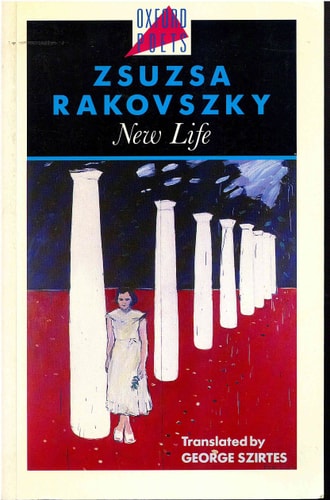
New Life
0
0
As an Amazon Associate and affiliate partner, Menrva Books earns from qualifying purchases. Learn more
Author Description
This new collection of almost forty poems taken from three previously published volumes is the first book of translations into English by the celebrated female Hungarian poet, Zsuzsa Rakovszky. Born in 1950, Rakovszky has already won a number of major literary prizes: the Graves Prize, the much coveted Jozsef Attila Prize, and the Dery Prize (twice). While her poems tend to concentrate on private experiences, with the themes of love, deceit, guilt, identity, and personal loss in particular, there is a current of feeling that emcompasses a more general and public sense of place and identity. Her poems in this volume, dealing with a shifting landscape of noisy neighbors, malfunctioning television sets, shadows on landings, snatched meetings, and dying ideologies, are complimented by a tone that is racy, fast, flittering, but precise. The translator George Szirtes, a well-known poet in Great Britain and of Hungarian origin, has managed to produce brilliant, formal, but natural translation that confirms the world of her poems as recognizably the world of her readers.
Menrva's Summary
THE PULSE
This collection captures the intersection of private interiority and the decaying social landscape of late 20th-century Hungary. Zsuzsa Rakovszky navigates the complexities of personal identity, guilt, and love against a backdrop of shifting political and social ideologies. The poems function as observations of a world in transition, where the mundane details of daily life—faulty appliances and domestic spaces—serve as anchors for broader existential inquiries. The narrative voice remains observant and precise, moving between intimate confession and public commentary to map the constraints of a changing society.
INSIDE THE PAGES
- Exploration of themes including deceit, identity, and personal loss
- Focus on domestic settings and everyday objects as metaphors
- Integration of political undertones within private experiences
- Formal poetic structure maintained through translation
- Racy and fast-paced rhythmic quality
- Precise imagery of urban and domestic environments
- Examination of the tension between individual and collective memory
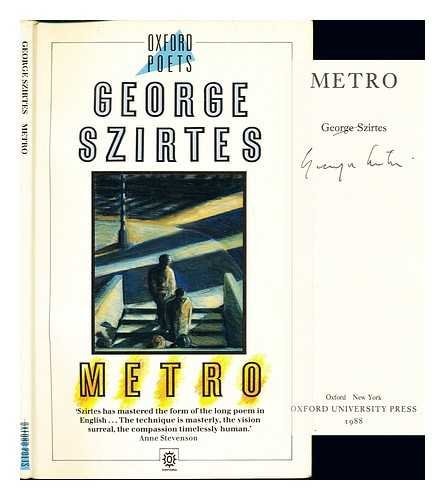
- Translation by George Szirtes preserving the original tone
THE COLLECTIVE ECHO
Discussion often centers on the effectiveness of George Szirtes' translations in capturing the specific, rhythmic voice of Rakovszky. Readers frequently highlight the balance between the poet's focus on intimate, private experiences and the broader, public sense of place that permeates the collection. Critics note the precision of her imagery, which transforms mundane domestic scenes into reflections on dying ideologies and personal identity. The work is often praised for its ability to make the specific cultural context of Hungary feel accessible and recognizable to a wider audience.
Page Count:
64
Publication Date:
1994-05-12
Publisher:
Oxford University Press
ISBN-10:
0192830899
ISBN-13:
9780192830890
Poetry
Translation
Hungarian
Contemporary Poetry
Community Tags
Similar Books