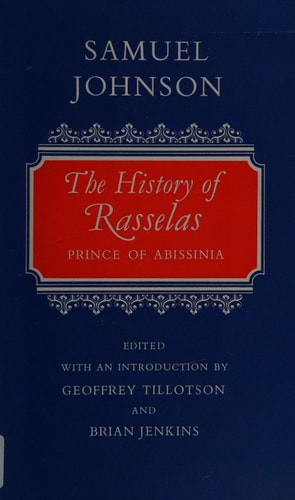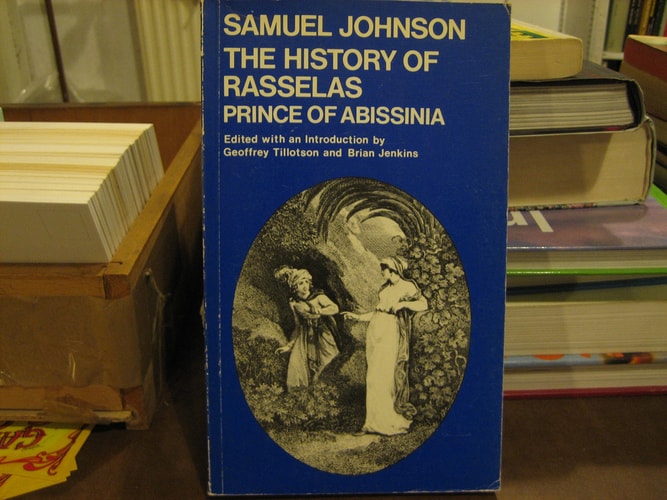
The History of Rasselas, Prince of Abissinia
0
0
As an Amazon Associate and affiliate partner, Menrva Books earns from qualifying purchases. Learn more
Author Description
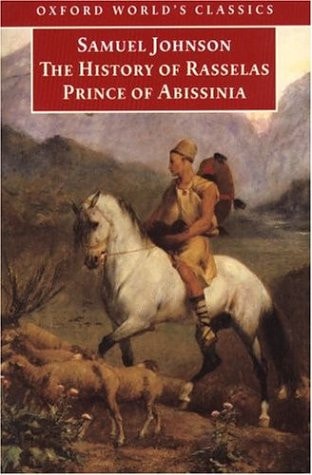
Rasselas--regarded as Johnson's most creative work--presents the story of the journey of Rasselas and his companions in search of "the choice of life." Its charm lies not in its plot, but rather in its wise and humane look at man's constant search for happiness. The text is based on the second edition as Samuel Johnson revised it.
Menrva's Summary
THE PULSE
Prince Rasselas escapes the confines of the Happy Valley to seek a meaningful life, only to discover that human existence is defined by perpetual dissatisfaction. Driven by a desire to understand the world beyond his gilded cage, Rasselas, accompanied by his sister Nekayah and the philosopher Imlac, travels through Egypt to observe various modes of living. The narrative functions as a philosophical inquiry, utilizing a third-person omniscient perspective to examine the limitations of human agency and the futility of seeking a singular, perfect path. The characters encounter diverse social strata, yet each interaction reinforces the logical constraint that no choice of life is free from inherent suffering or disappointment.
INSIDE THE PAGES
- Philosophical dialogue as the primary driver of narrative progression
- Allegorical setting of the Happy Valley representing sheltered ignorance
- Exploration of the vanity of human wishes
- Contrast between theoretical wisdom and practical experience
- Episodic structure following the characters' various encounters
- Satirical commentary on contemporary social and intellectual trends
- Focus on the psychological state of the protagonists rather than external action
- Didactic tone characteristic of 18th-century moral prose
THE COLLECTIVE ECHO
Readers and critics frequently note that the work prioritizes philosophical reflection over traditional plot development. Discussion often centers on the text's somber yet humane examination of the human condition and the inevitable limitations of personal choice. Many observers highlight the effectiveness of the dialogue in conveying complex moral arguments without sacrificing the clarity of the prose. The atmosphere is often described as contemplative, with the narrative serving as a bridge between moral essay and fictional storytelling. Readers seeking a fast-paced narrative may find the focus on intellectual discourse challenging, but those interested in 18th-century thought find the work highly rewarding.
Page Count:
224
Publication Date:
1999-04-22
Publisher:
Oxford University Press
ISBN-10:
0192839136
ISBN-13:
9780192839138
Satire
Ethiopia fiction
18th century
Allegory
Classic Literature
Philosophical