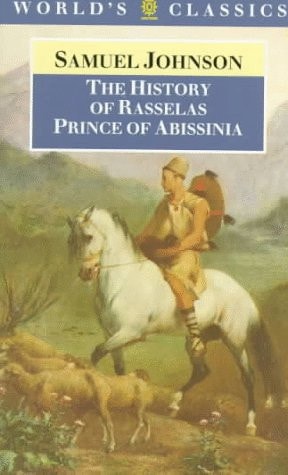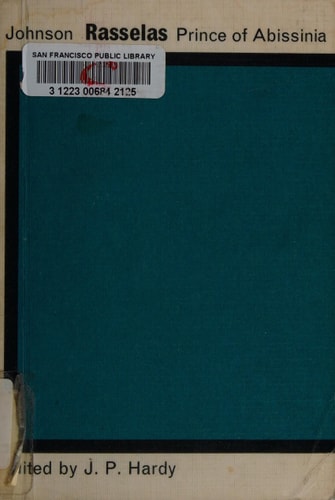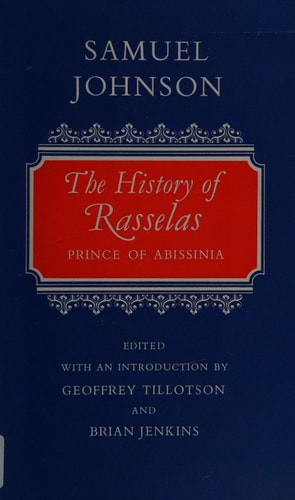
The History of Rasselas, Prince of Abissinia
0
0
As an Amazon Associate and affiliate partner, Menrva Books earns from qualifying purchases. Learn more
Author Description
The plot is simple in the extreme. Rasselas, son of the King of Abyssinia, is shut up in a beautiful valley, "till the order of succession should call him to the throne." He grows weary of the factitious entertainments of the place, and after much brooding escapes with his sister Nekayah, her attendant Pekuah and his poet-friend Imlac. They are to see the world and search for happiness, but after some sojourn in Egypt, where they frequent various classes of society and undergo a few mild adventures, they perceive the futility of their search and abruptly return to Abyssinia.
Menrva's Summary
THE PULSE
A young prince, confined to a secluded paradise, abandons his sheltered existence to seek the true nature of happiness in the wider world. Rasselas, the son of the King of Abyssinia, finds his life within the Happy Valley monotonous and devoid of purpose. Accompanied by his sister Nekayah, her attendant Pekuah, and the philosopher Imlac, he ventures into Egypt to observe various modes of life and social strata. The narrative functions as a philosophical inquiry, utilizing a linear structure to contrast the prince's idealistic expectations with the stark realities of human existence.
INSIDE THE PAGES
- Philosophical dialogue as a primary narrative driver
- Allegorical representation of human desires and limitations
- Episodic structure documenting various social observations
- Satirical commentary on contemporary 18th-century intellectual trends
- Focus on the futility of seeking a singular path to contentment
- Didactic tone characteristic of Enlightenment-era prose
- Minimalist plot progression prioritizing thematic exploration
- Character archetypes representing different human perspectives
THE COLLECTIVE ECHO
Readers and critics frequently highlight the work as a quintessential example of Enlightenment-era philosophical inquiry. Discussion often centers on the stark contrast between the idyllic setting of the Happy Valley and the disillusioning realities encountered by the protagonists in Egypt. Many observers note that the prose remains dense and highly structured, reflecting the author's commitment to moral and intellectual rigor. The text is often praised for its refusal to offer easy answers, instead encouraging readers to contemplate the inherent complexities of the human condition. Scholars frequently emphasize how the narrative serves as a critique of optimistic philosophies prevalent during the eighteenth century.
Page Count:
145
Publication Date:
1971-01-01
Publisher:
Oxford University Press
ISBN-10:
0192553429
ISBN-13:
9780192553423
Satire
18th century
Philosophical
Ethiopia fiction
Allegory
classic