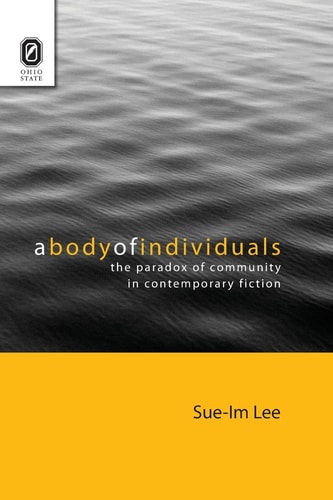
A Body of Individuals: The Paradox of Community in Contemporary Fiction
0
0
As an Amazon Associate and affiliate partner, Menrva Books earns from qualifying purchases. Learn more
Author Description
Why are some versions of the collective "we" admired and desired while other versions are scorned and feared? A Body of Individuals: The Paradox of Community in Contemporary Fiction examines the conflict over the collective "we" through discourses of community. In the discourse of benevolent community, community is a tool towards achieving healing, productiveness, and connection. In the discourse of dissenting community, community that serves a function is simply another name for totalitarianism; instead, community must merely be a fact of coexistence. What are the sources and the appeal of these irreconcilable views of community, and how do they interact in contemporary fiction's attempt at imagining "we"? By engaging contemporary U.S. writers such as Toni Morrison, Richard Powers, Karen Tei Yamashita, Lydia Davis, Lynne Tillman, and David Markson with theorists such as Jean-Luc Nancy, Giorgio Agamben, François Lyotard, Ernesto Laclau, Louis Althusser, Roland Barthes, and Ludwig Wittgenstein, this book reveals how the two conflicting discourses of community--benevolent and dissenting--are inextricably intertwined in various literary visions of "we"--"we" of the family, of the world, of the human, and of coexistence. These literary visions demonstrate, in a way that popular visions of community and postmodern theories of community cannot, the dialectical relationship between the discourses of benevolent community and dissenting community. Sue-Im Lee argues that contemporary fiction's inability to resolve the paradox results in a model of ambivalent community, one that offers unique insights into community and into the very notion of unity.
Menrva's Summary
THE THESIS
This book investigates the conflicting discourses surrounding community and their manifestation in contemporary fiction. Sue-Im Lee, drawing on her expertise in literary criticism, analyzes how certain visions of the collective 'we' are embraced while others are rejected. The book engages with prominent U.S. writers such as Toni Morrison and Richard Powers, alongside theorists like Jean-Luc Nancy and Giorgio Agamben, to explore the tension between benevolent community, which seeks healing and connection, and dissenting community, which views functional community as a form of totalitarianism and prioritizes mere coexistence. Lee argues that contemporary fiction, by grappling with these irreconcilable views, reveals the dialectical relationship between these two discourses and ultimately presents a model of ambivalent community.
THE SCOPE MAP
- Analysis of the benevolent discourse of community, focusing on its role in achieving healing, productivity, and connection.
- Examination of the dissenting discourse of community, which equates functional community with totalitarianism and emphasizes coexistence.
- Engagement with contemporary U.S. writers including Toni Morrison, Richard Powers, Karen Tei Yamashita, Lydia Davis, Lynne Tillman, and David Markson.
- Integration of theoretical frameworks from Jean-Luc Nancy, Giorgio Agamben, François Lyotard, Louis Althusser, Roland Barthes, and Ludwig Wittgenstein.
- Exploration of literary visions of 'we' across various contexts: family, the world, humanity, and coexistence.
- Demonstration of how contemporary fiction uniquely illustrates the dialectical relationship between benevolent and dissenting community discourses.
- Argument for a model of ambivalent community as the outcome of fiction's inability to resolve the paradox of collective identity.
- Insights into the notion of unity through the lens of contemporary literary explorations of community.
THE AUTHORITY PERSPECTIVE
This book is positioned as a significant contribution to literary criticism and community studies, offering a nuanced analysis of contemporary fiction's engagement with collective identity. By juxtaposing literary works with theoretical discourse, it aims to provide unique insights into the paradox of community that popular visions and postmodern theories may not fully capture. The work is likely to appeal to scholars and readers interested in the intersection of literature, philosophy, and sociology, particularly those examining the complexities of 'we' in modern society.
Page Count:
208
Publication Date:
2020-07-01
Publisher:
Ohio State University Press
ISBN-10:
0814256627
ISBN-13:
9780814256626
Non-Fiction
Contemporary
Sociology
Community Studies
Literary Criticism
Community Tags
Similar Books