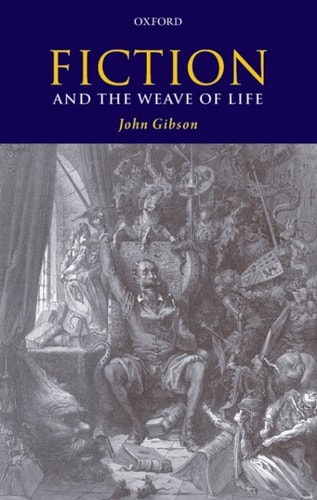
Fiction and the Weave of Life
0
0
As an Amazon Associate and affiliate partner, Menrva Books earns from qualifying purchases. Learn more
Author Description
Literature is a source of understanding and insight into the human condition. Yet ever since Aristotle, philosophers have struggled to provide a plausible account of how this can be the case. For surely the fictionality - the sheer invented character - of the literary work means that literature concerns itself not with the real world but with other worlds - what are commonly called fictional worlds. How is it, then, that fictions can tell us something of consequence about reality? In Fiction and the Weave of Life, John Gibson offers a novel and intriguing account of the relationship between literature and life, and shows that literature's great cultural and cognitive value is inseparable from its fictionality and inventiveness.
Menrva's Summary
THE THESIS
How can fictional narratives, which are inherently invented, provide genuine insight and knowledge about the real world? John Gibson, a philosopher specializing in aesthetics and the philosophy of literature, examines the long-standing paradox of fiction. He argues against the view that fictionality is a barrier to truth, proposing instead that the cognitive value of literature is derived precisely from its status as an invented construct.
THE SCOPE MAP
What You Will Find
- An analysis of the Aristotelian tradition regarding mimesis and truth.
- A philosophical framework connecting fictional worlds to real-world understanding.
- Arguments regarding the cognitive function of imaginative literature.
Scope Limits
- The text does not provide a comprehensive history of literary theory.
- It does not focus on specific genre-based literary analysis or practical criticism.
THE AUTHORITY PERSPECTIVE
Scholars and philosophers recognize this work as a significant contribution to the philosophy of literature, particularly for its defense of the cognitive value of fiction. Readers frequently note the academic density of the prose, which is intended for those familiar with analytic philosophy and aesthetic theory.
Page Count:
234
Publication Date:
2008-01-01
Publisher:
Oxford University Press
ISBN-10:
0191538485
ISBN-13:
9780191538483
Philosophy
Non-Fiction
Aesthetics
Philosophy of
Fiction
Literary Criticism
Literature