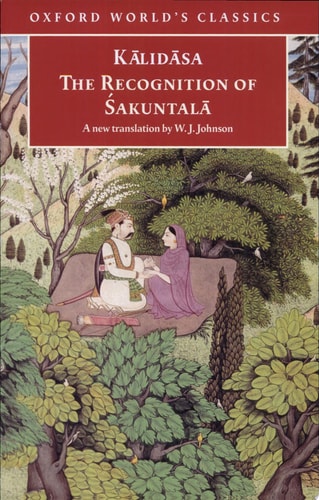
The Recognition of Śakuntala: A Play in Seven Acts
0
0
As an Amazon Associate and affiliate partner, Menrva Books earns from qualifying purchases. Learn more
Author Description
Kalidasa's play about the love of King Dusyanta for Sakuntala, a monastic girl, is the supreme work of Sanskrit drama by its greatest poet and playwright (c.4th century CE). Overwhelmingly erotic in tone and in performance, The Recognition of Sakuntala aimed to produce an experience of aesthetic rapture in the audience, comparable to certain types of mystical experience.The pioneering English translation of Sakuntala in 1789 caused a sensation among European composers and writers (including Goethe), and it continues to be performed around the world. This vibrant new verse translation includes the famous version of the story from the Mahabharata, a poetic and dramatic text in its own right and a likely source for Kalidasa. The introduction discusses the play in the aesthetic and cultural context of ancient India.
Menrva's Summary
THE PULSE
The central conflict arises when King Dusyanta encounters the ascetic Sakuntala, leading to a secret marriage that is subsequently jeopardized by a powerful curse and the loss of a token of recognition. Driven by the pursuit of love and the complexities of duty, the protagonist must navigate the social and spiritual hierarchies of ancient Indian society. The narrative follows the couple through a series of trials, including separation, divine intervention, and the eventual restoration of their bond. The play utilizes a structure of seven acts, blending courtly intrigue with the serene atmosphere of a forest hermitage. The narrative framework relies on classical Sanskrit dramatic conventions, incorporating both prose and lyrical verse to convey the emotional states of the characters.
INSIDE THE PAGES
- Seven-act dramatic structure
- Integration of Sanskrit verse and prose
- Exploration of aesthetic rapture or rasa
- Themes of divine curse and karmic retribution
- Contrast between courtly life and forest asceticism
- Use of nature as a mirror for human emotion
- Inclusion of supernatural and mythological elements
- Focus on the transformative power of recognition
THE COLLECTIVE ECHO
Discussion often centers on the play's sophisticated use of language and its ability to evoke specific emotional states in the audience. Readers frequently highlight the contrast between the rigid social structures of the royal court and the natural, spiritual freedom of the forest setting. Critics often analyze the work's historical impact on Western literature, noting how its initial translation influenced major figures like Goethe. The text is widely regarded as a foundational piece of world literature that balances intricate poetic form with universal themes of love and loss. Scholars continue to examine the play's role in defining the aesthetic principles of classical Indian drama.
Page Count:
192
Publication Date:
2001-11-15
Publisher:
Oxford University Press
ISBN-10:
019283911X
ISBN-13:
9780192839114
Romance
Poetry
Drama
Sanskrit
Mythology
Classical