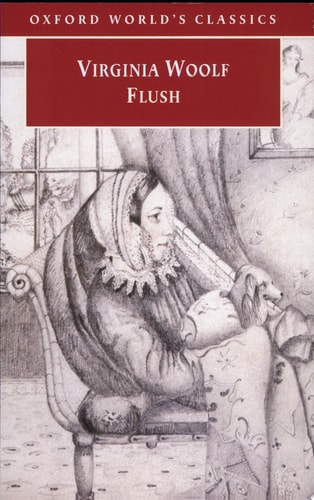
Flush
0
0
As an Amazon Associate and affiliate partner, Menrva Books earns from qualifying purchases. Learn more
Author Description
Product Description'I lay in the garden and red the Browning love letters, and the figure of their dog made me laugh so I couldn't resist making him a Life.' Throughout her career, Woolf invokes the animal world both directly and metaphorically. She started to write a biography of Elizabeth Barrett Browning's spaniel after finishing The Waves, tracing the life of the spaniel from his country origins, his puppyhood spent with the writer Mary Mitford, through his sheltered existence with Elizabeth Barrett in her sick room, and later travels in Florence. But Flush is much more than a playful writer's holiday. As well as offering an exploration of a life of the senses free from the tyranny of words, Flush can be read as an allegorical testimony to the inscrutable, discarded, unrepresentable lives of the Victorian women poets, who were barely discussed or read in the 1930s. From a quite literally low point of view, Woolf explores class and gender in Victorian London, with gently mocking humour. Charming yet also radical, Flush is a work of sensuous imagination, an apparently light text that opens up a range of questions concerning difference which are woven through the whole of Woolf's writing.About the AuthorKate Flint is a Reader in English Language and Literature and Fellow of Linacre College, Oxford.
Menrva's Summary
THE PULSE
The narrative follows the life of a spaniel named Flush, whose existence shifts from the rural countryside to the confined, literary world of Elizabeth Barrett Browning. Flush serves as the primary lens through which the reader experiences the sensory details of Victorian life, moving from the domestic intimacy of a sickroom to the vibrant streets of Florence. The story operates as a biographical fiction, utilizing the dog's limited perspective to observe the social constraints and gender dynamics of the nineteenth century. Woolf employs a unique narrative voice that balances the animal's instinctual reality with the complex human relationships surrounding him.
INSIDE THE PAGES
- Sensory-focused prose emphasizing smell and sound over human language
- Biographical framework centered on the life of Elizabeth Barrett Browning
- Satirical commentary on Victorian class structures and social expectations
- Allegorical exploration of the lives of female poets
- Contrast between rural origins and urban confinement
- Shift in narrative tone from playful observation to social critique
- Exploration of the bond between human and animal companions
- Non-traditional perspective that challenges anthropocentric storytelling
THE COLLECTIVE ECHO
Readers and critics frequently note the stylistic ingenuity Woolf displays in adopting a non-human perspective to critique human society. Discussion often centers on how the text functions as both a lighthearted animal biography and a serious exploration of Victorian gender politics. Many observers highlight the effectiveness of the sensory descriptions, which provide a distinct atmosphere compared to Woolf's more experimental novels. The work is often analyzed for its subtle humor and its ability to weave complex thematic threads into a seemingly simple narrative structure. Scholars frequently point to this book as a vital component in understanding Woolf's broader concerns regarding identity and social difference.
Page Count:
184
Publication Date:
1998-01-01
Publisher:
Oxford University Press España, S.A.
ISBN-10:
0192833286
ISBN-13:
9780192833280
Literary Fiction
Biography
Satire
Italy
Victorian Era
Dog owners
Fiction biographical
classic
England
Authors fiction
Animal