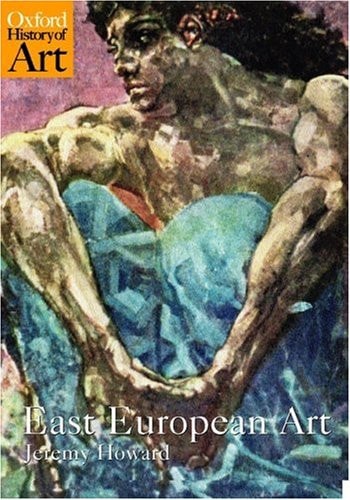
East European Art: 1650-1950
0
0
As an Amazon Associate and affiliate partner, Menrva Books earns from qualifying purchases. Learn more
Author Description
Written by leading scholars at the forefront of new thinking, many of whom are rising stars in their fields, the Oxford History of Art series offers substantial and innovative texts that clarify, illuminate, and debate the critical issues at the heart of art history today. This groundbreaking series makes use of new research and methodologies, as well as newly accessible and non-canonical works, to offer comprehensive coverage of the art world. Lavishly illustrated and superbly designed, the Oxford History of Art brings new substance and verve to the exciting and ubiquitous world of art.The latest addition to the series is a pioneering overview of the visual cultures of Eastern Europe in the modern age. Here, art historian Jeremy Howard challenges traditional definitions of what constitutes "European" art and embraces the whole spectrum of art creation, including painting, sculpture, architecture, the applied arts, photography, and performance. Avoiding conventional art historical divisions, Howard focuses on the many hidden relationships between the different art forms and artistic cultures that flourished in the vast region known as Eastern Europe, and how these cultures inter-related with the wider world. In addition to the rise and fall of the two great art academies in Vienna and St. Petersburg, Howard examines the blending of migratory and sedentary cultures in the region, the role of women, and the political manipulation of the image. He brings to the fore many overlooked artists and concentrates on neglected elements of work by better-known figures. Throughout, he reveals how the Habsburg, Romanov, and Ottoman empires vied with one another through art and how individuals and nations strove to maintain and realize their voice through visual language.Bringing light to a woefully neglected subject, Howard has produced a work that will prove essential reading for lovers of art history and Eastern European culture.
Menrva's Summary
THE THESIS
This work investigates the visual culture of Eastern Europe between 1650 and 1950, questioning traditional definitions of European art and the regional boundaries of artistic production. Jeremy Howard, an established art historian, utilizes a broad methodological approach to synthesize the complex interplay between imperial powers and local artistic identities. By examining the region through the lens of migration, political influence, and diverse media, he argues that Eastern European art constitutes a distinct and vital component of the broader global art historical record.
THE SCOPE MAP
What You Will Find
- Analysis of painting, sculpture, architecture, applied arts, photography, and performance art.
- Examination of the influence of the Habsburg, Romanov, and Ottoman empires on regional aesthetics.
- Discussion of the role of art academies in Vienna and St. Petersburg.
- Exploration of the intersection between migratory and sedentary cultural practices.
Scope Limits
- The text focuses primarily on the period between 1650 and 1950, excluding contemporary post-1950 developments.
- While comprehensive, the volume does not provide an exhaustive catalogue of every artist within the region.
THE AUTHORITY PERSPECTIVE
Scholars and students of art history frequently cite this text as a foundational resource for understanding the often-overlooked visual traditions of Eastern Europe. Readers note the academic rigor of the prose and the author's success in integrating diverse artistic disciplines into a cohesive historical narrative.
Page Count:
272
Publication Date:
2007-02-12
Publisher:
Oxford University Press
ISBN-10:
0192842242
ISBN-13:
9780192842244
Academic
Visual Culture
Art History
Eastern European Studies
Art european
European History
Community Tags
Similar Books