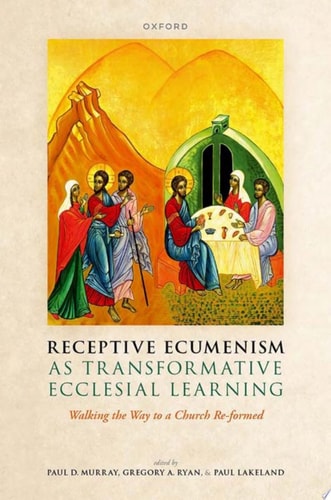
Receptive Ecumenism as Transformative Ecclesial Learning: Walking the Way to a Church Re-formed
0
0
As an Amazon Associate and affiliate partner, Menrva Books earns from qualifying purchases. Learn more
Author Description
Receptive Ecumenism asks not what other churches can learn from us, but 'what can we learn and receive with integrity from our ecclesial others?' Since the publication of Receptive Ecumenism and the Call to Catholic Learning: Exploring a Way for Contemporary Ecumenism (OUP, 2008), this fresh ecumenical strategy has been adopted, critiqued, and developed in different Christian traditions, and in local, national, and international settings, including the most recent bilateral dialogue of the Anglican-Roman Catholic International Commission (ARCIC III). The thirty-eight chapters in this new volume, by academics, church leaders, and ecumenical practitioners who have adopted and adapted Receptive Ecumenism in various ecclesial and cultural contexts, show how Receptive Ecumenism has grown and matured.Part One demonstrates how Receptive Ecumenism itself is capable of being received with integrity into very different ecclesiologies and ecclesial traditions. In Part Two, this approach to transformative ecumenical learning is applied to some recurrent ecclesial problems, such as the understanding and practice of ministry, revealing new insights and practical opportunities. Part Three examines the potential and challenges for Receptive Ecumenism in different international settings. Part Four draws on scripture, hermeneutics, and pneumatology to offer critical reflection on how Receptive Ecumenism itself implements transformative ecclesial learning.Addressing the 70th Anniversary of the World Council of Churches, Archbishop Justin Welby, said that 'One of the most important of recent ecumenical developments has been the concept of "Receptive Ecumenism"'. This volume provides an indispensable point of reference for understanding and applying that concept in the life of the Christian churches today.
Menrva's Summary
THE THESIS
This volume investigates the efficacy and practical application of Receptive Ecumenism as a methodology for transformative learning across diverse Christian traditions. The authors, including Paul D. Murray and other prominent ecumenical scholars and practitioners, argue that shifting the ecumenical focus from proselytizing to mutual reception allows churches to address long-standing ecclesial challenges. By synthesizing academic research with practical case studies, the text provides a framework for how different denominations can integrate insights from one another while maintaining their own theological integrity.
THE SCOPE MAP
What You Will Find
- Analysis of Receptive Ecumenism within various international and local ecclesial contexts.
- Applications of the methodology to specific issues such as ministry, hermeneutics, and pneumatology.
- Thirty-eight chapters contributed by a diverse group of academics, church leaders, and practitioners.
- Reflections on the historical development of the concept since its formal introduction in 2008.
Scope Limits
- The text focuses primarily on formal ecumenical dialogue and institutional church structures rather than grassroots interfaith relations.
- It does not provide a singular, universal solution to all denominational divisions but rather offers a framework for ongoing dialogue.
THE AUTHORITY PERSPECTIVE
Scholars and church leaders recognize this volume as a primary reference for the current state of ecumenical theory and practice. Readers frequently note the academic density of the prose, which is intended for those already familiar with contemporary ecclesiological discourse.
Page Count:
576
Publication Date:
2022-10-31
Publisher:
Oxford University Press
ISBN-10:
0192845101
ISBN-13:
9780192845108
Religion
Christianity
Ecumenism
Theology
Ecclesiology
Community Tags
Similar Books