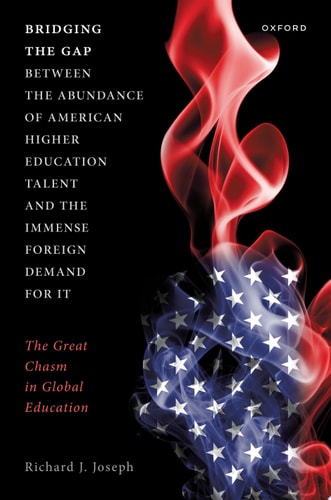
Bridging the Gap between the Abundance of American Higher Education Talent and the Immense Foreign Demand for It: The Great Chasm in Global Education
0
0
As an Amazon Associate and affiliate partner, Menrva Books earns from qualifying purchases. Learn more
Author Description
The gap between the abundance of American higher education talent and the immense foreign demand for it is the great chasm in global education. It is a gulf of lost opportunities. It is also a space of great economic potential. This book describes the great chasm, examines factors underlying it, and suggests ways to bridge the gap to realize this potential.The abundance of talent stems from the slackening growth of the U.S. higher education sector in the New Millennium. Contributing to the slowdown are flat enrollments, adverse demographic trends, U.S. visa restrictions, and intensifying competition. The immense foreign demand has been fueled by the secular expansion of the global economy. It has been shaped by the pressing need in emerging markets to develop an educated workforce.The great chasm creates an opportunity for American academic institutions to extend their global reach. Bridging the gap, however, is not an easy feat for most U.S. colleges and universities. It is complicated by an institutional culture that is averse to commercialization, an organizational structure that is operationally slow, and a governance system that often leads to indecision, conflict, and paralysis. Bridging the gap requires fundamental changes in the culture, organization, and governance of traditional U.S. academic institutions. These changes will pave the way for international expansion, which could enhance the financial well-being of these institutions, the social-well-being of less developed nations, and the critical role that America plays globally in knowledge creation, the dissemination of ideas, and the pursuit of the truth.
Menrva's Summary
THE THESIS
This book investigates the structural and cultural impediments preventing American higher education institutions from capitalizing on the significant global demand for their academic expertise. Author Richard J. Joseph, drawing on his background in higher education management and economic analysis, argues that a combination of internal institutional inertia and external market shifts has created a disconnect between U.S. supply and international demand. He proposes that universities must undergo fundamental organizational and governance reforms to successfully expand their global footprint and secure their long-term financial viability.
THE SCOPE MAP
What You Will Find
- Analysis of U.S. higher education enrollment trends and demographic shifts.
- Examination of the economic drivers behind international demand for American academic services.
- Assessment of institutional barriers including governance systems and cultural resistance to commercialization.
Scope Limits
- Does not provide a comprehensive guide to specific visa application procedures.
- Does not offer a detailed case-by-case analysis of every individual U.S. university's international strategy.
THE AUTHORITY PERSPECTIVE
Readers frequently note the book's critical stance on the administrative rigidity of traditional academic institutions. Experts highlight this as a relevant text for university administrators and policymakers concerned with the future of globalized education.
Page Count:
272
Publication Date:
2022-11-09
Publisher:
Oxford University Press
ISBN-10:
0192848305
ISBN-13:
9780192848307
Higher Education
Education And Globalization
Universities And Colleges
Education
International business
Education higher
Universités
Community Tags
Similar Books