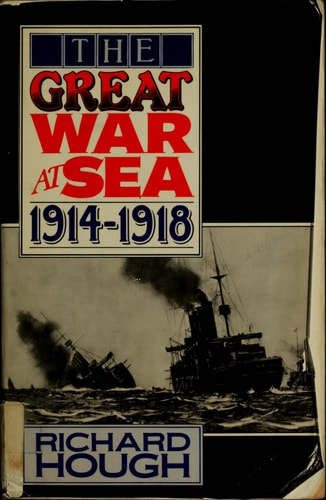
The Great War at Sea, 1914-1918
0
0
As an Amazon Associate and affiliate partner, Menrva Books earns from qualifying purchases. Learn more
Author Description
The contest between the German and British navies during World War I was the greatest naval conflict in history. In this volume, Richard Hough presents a vivid and detailed account of this sea war, beginning with the build-up to war and ending with Germany's capitulation at the end of 1918. As much a history of men as of guns and ships, this contest pitted England's Winston Churchill, an arrogant but hard-working leader; the influential ex-First Sea Lord "Jacky" Fisher; and Commander-in-Chief of the Grand Fleet Sir John Jellicoe against Germany's autocratic Kaiser Wilhelm and the men under his command. When war broke out, in August of 1914, Britain had ruled the seas, almost uncontested, for nearly 100 years and boasted the biggest, most heavily gunned battleship in the world, the Dreadnought. German submarines and floating mines put this supremacy to the test, and forced British naval leaders to devise techniques, such as the convoy, to combat German technology. Hough describes the war's major and minor batttles--fought in the Falklands, the North Sea, and the Dardanelles--and especially its climax, the 1916 Battle of Jutland, an indecisive confrontation that bitterly disappointed the Royal Navy. Among the many insights and interpretations that Hough brings to this work is his conclusion that the Royal Navy's defeat of the Kriegsmarine was the prime factor in the surrender of Central Powers' land forces at the end of 1918. With vivid portraits of historic figures, stories of behind-the-scenes political battles, and numerous maps and photographs, The Great War at Sea offers a lively, authoritative account of a dramatic era of naval history.
Menrva's Summary
THE THESIS
This work investigates the pivotal role of naval warfare in determining the outcome of the First World War. Richard Hough, a noted historian of maritime conflict, utilizes archival records and biographical analysis to argue that the British naval blockade and the eventual containment of the German fleet were the primary catalysts for the collapse of the Central Powers on land by 1918. The text examines the strategic tension between traditional battleship supremacy and the emerging threat of submarine warfare.
THE SCOPE MAP
What You Will Find
- A comprehensive chronological account of naval engagements from 1914 to 1918.
- Detailed analysis of the Battle of Jutland and its strategic implications.
- Biographical profiles of key figures including Winston Churchill, Jacky Fisher, and Kaiser Wilhelm.
- Examination of technological shifts, specifically the transition to convoy systems and the impact of U-boat warfare.
Scope Limits
- The text focuses primarily on the British and German naval theaters, with limited coverage of secondary naval fronts.
- It does not provide an exhaustive technical manual on naval engineering or ship design specifications.
THE AUTHORITY PERSPECTIVE
Historians and naval enthusiasts frequently cite this work for its balanced approach to both the human element of command and the strategic realities of the conflict. Readers often note that the prose remains accessible to non-specialists while providing sufficient detail for those interested in the specific tactical maneuvers of the era.
Page Count:
384
Publication Date:
1987-05-21
Publisher:
Oxford University Press
ISBN-10:
0192851810
ISBN-13:
9780192851819
History
European History
Military History
World War
Naval history
Community Tags
Similar Books