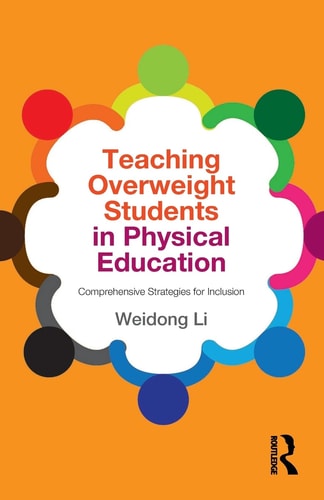
Teaching Overweight Students in Physical Education: Comprehensive Strategies for Inclusion
0
0
As an Amazon Associate and affiliate partner, Menrva Books earns from qualifying purchases. Learn more
Author Description
Overweight students often suffer negative consequences with regard to low physical ability, skills, and fitness; obesity-related health implications; teasing and exclusion from physical education by their peers; and psychosocial and emotional suffering as a result of weight stigma. Widespread obesity and its negative consequences have presented an unprecedented challenge for teachers, who must include overweight students in physical education activities while striving to provide individualized instruction for diverse learners and foster positive learning environments. Educators stand to benefit greatly from specific knowledge and skills for reducing bias and including overweight students. Teaching Overweight Students in Physical Education offers a compact and easy-to-read take on this problem. It begins by summarizing information on the obesity trend, weight stigma, and coping mechanisms. Next, it introduces the Social Ecological Constraint Model, which casts the teacher as an agent of change who is aware of and manipulates a variety of factors from multiple levels for effective inclusion of overweight students in physical education. Finally, it provides detailed strategies guided by the conceptual model for instructors to implement into their physical education classes. In all, this book provides a map for successfully including overweight students and offers practical strategies to help physical education teachers create inclusive and safe climates, and design differentiated instruction to maximize overweight or obese students' engagement and learning. Comprehensive, evidence-based, and timely, this book is tailored for physical education educators and practitioners, but will also benefit parents of overweight children by providing them with strategies for educating their children on how to cope with stigma and weight-related teasing.
Menrva's Summary
THE THESIS
This book addresses the significant challenges faced by overweight students in physical education settings and provides educators with actionable strategies for their inclusion. The author, Weidong Li, draws upon the obesity trend, weight stigma, and coping mechanisms to frame the problem. It introduces the Social Ecological Constraint Model, positioning teachers as agents of change who can manipulate various factors to effectively include overweight students. The book then details practical strategies derived from this model to help physical education teachers create inclusive and safe environments, and design differentiated instruction to enhance engagement and learning for overweight or obese students.
THE SCOPE MAP
- Summary of the obesity trend, weight stigma, and coping mechanisms.
- Introduction to the Social Ecological Constraint Model for teacher-led inclusion.
- Detailed strategies for implementing inclusive physical education practices.
- Guidance on designing differentiated instruction for overweight students.
- Methods for creating safe and inclusive climates in physical education classes.
- Information for parents on helping children cope with stigma and teasing.
THE AUTHORITY PERSPECTIVE
This book is presented as a comprehensive and evidence-based resource tailored for physical education educators and practitioners. The framing suggests it offers practical guidance for addressing the complex issue of including overweight students, aiming to equip teachers with specific knowledge and skills. The inclusion of the Social Ecological Constraint Model indicates a theoretical framework underpinning the practical strategies provided. It is positioned as a timely contribution to the field, offering a map for successful inclusion and support for both educators and parents.
Page Count:
121
Publication Date:
2017-01-01
Publisher:
Routledge
ISBN-10:
1138841358
ISBN-13:
9781138841352
Health
Psychology
Self-help
Non-Fiction
Sociology
Education
Physical Education
Inclusion
Community Tags
Other Editions(3)

Similar Books










Reader Comments
Share Your Thoughts
No comments yet. Be the first to share your thoughts!