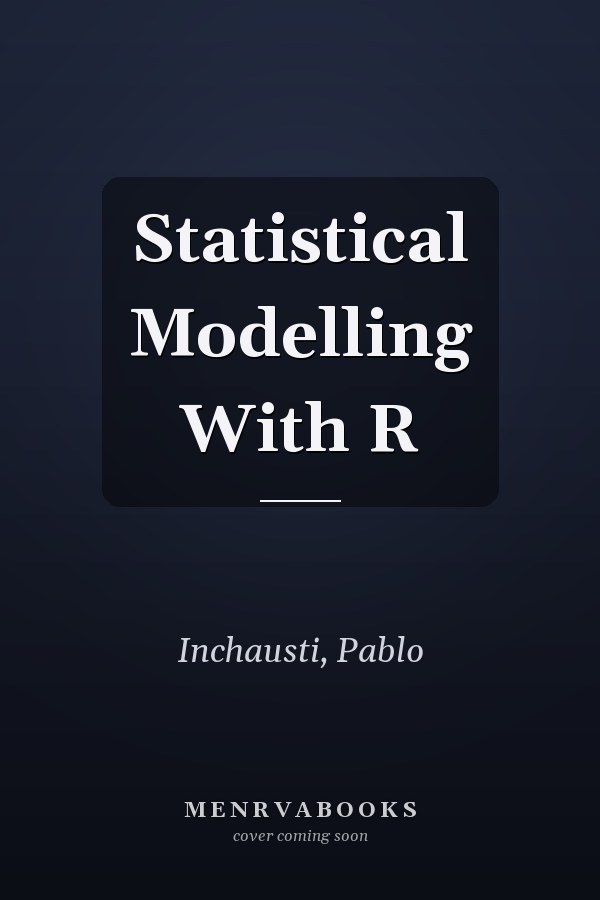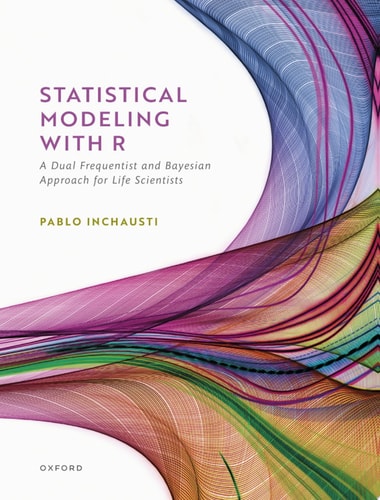
Statistical Modeling with R: A Dual Frequentist and Bayesian Approach for Life Scientists
0
0
As an Amazon Associate and affiliate partner, Menrva Books earns from qualifying purchases. Learn more
Author Description
To date, statistics has tended to be neatly divided into two theoretical approaches or frameworks: frequentist (or classical) and Bayesian. Scientists typically choose the statistical framework to analyse their data depending on the nature and complexity of the problem, and based on their personal views and prior training on probability and uncertainty. Although textbooks and courses should reflect and anticipate this dual reality, they rarely do so. This accessible textbook explains, discusses, and applies both the frequentist and Bayesian theoretical frameworks to fit the different types of statistical models that allow an analysis of the types of data most commonly gathered by life scientists. It presents the material in an informal, approachable, and progressive manner suitable for readers with only a basic knowledge of calculus and statistics.Statistical Modeling with R is aimed at senior undergraduate and graduate students, professional researchers, and practitioners throughout the life sciences, seeking to strengthen their understanding of quantitative methods and to apply them successfully to real world scenarios, whether in the fields of ecology, evolution, environmental studies, or computational biology.
Menrva's Summary
THE THESIS
This book investigates how life scientists can effectively integrate both frequentist and Bayesian statistical frameworks to analyze complex biological data. Author Pablo Inchausti addresses the historical divide between these two methodologies by providing a unified pedagogical approach. The text is designed for researchers and students who possess a foundational understanding of calculus and statistics but require a practical bridge to apply these models to real-world biological scenarios. By presenting both frameworks side-by-side, the author enables practitioners to select the most appropriate analytical tool based on the specific nature of their research questions.
THE SCOPE MAP
What You Will Find
- Comparative analysis of frequentist and Bayesian statistical frameworks
- Practical applications of statistical modeling using the R programming language
- Methodologies tailored for ecology, evolution, environmental studies, and computational biology
Scope Limits
- Advanced theoretical derivations beyond basic calculus and statistics
- Non-biological applications or general-purpose statistical theory
THE AUTHORITY PERSPECTIVE
Experts recognize this text as a valuable resource for bridging the gap between theoretical statistics and applied biological research. Readers frequently note the accessible prose and the utility of the dual-framework approach for graduate-level coursework.
Page Count:
480
Publication Date:
2023-02-02
Publisher:
Oxford University Press
ISBN-10:
0192859013
ISBN-13:
9780192859013
Academic Textbook
Statistics
Data Science
Life sciences
R Programming
Community Tags
Similar Books