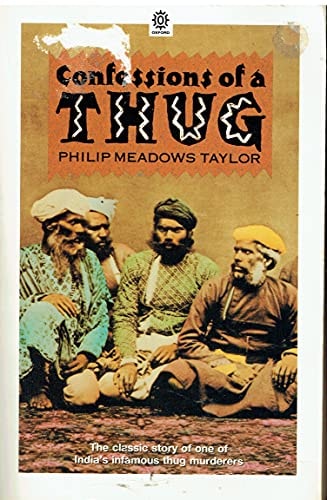
Confessions of a Thug
0
0
As an Amazon Associate and affiliate partner, Menrva Books earns from qualifying purchases. Learn more
Author Description
First published in 1839, this novel was written, according to its author, not `to gratify a morbid taste in any one for tales of horror and crime', but rather `to expose the practices of the Thugs'.
Menrva's Summary
THE PULSE
A notorious Thug recounts his life of ritualized murder and deception to a British officer, revealing the inner workings of a clandestine criminal brotherhood.
The protagonist, Ameer Ali, serves as the narrator, detailing his initiation into the Thuggee cult and his subsequent career as a strangler. He faces the constant threat of British colonial authorities who seek to dismantle the organization, while navigating the internal hierarchies and moral justifications of his sect. The narrative is presented as a series of confessions, providing a window into the social and criminal landscape of 19th-century India through a first-person perspective.
INSIDE THE PAGES
- First-person confessional narrative structure
- Detailed accounts of Thuggee rituals and operational methods
- Exploration of the intersection between criminal activity and religious devotion
- Portrayal of the British colonial administrative perspective
- Vivid descriptions of the Indian landscape and travel routes
- Examination of the psychological rationalization of violence
- Historical context regarding the suppression of organized crime
- Use of authentic period terminology and cultural references
THE COLLECTIVE ECHO
Discussion often centers on the book's role as a primary influence on British colonial policy regarding the suppression of Thuggee in India. Readers frequently highlight the tension between the narrator's horrific actions and the author's attempt to provide a humanized, albeit criminal, perspective. Critics often analyze the text as a blend of authentic historical observation and sensationalized Victorian storytelling conventions. The pacing is noted for its methodical progression through the protagonist's life, offering a deep look at the social structures of the time. Many readers find the work significant for its historical documentation of a specific, albeit brutal, cultural phenomenon.
Page Count:
576
Publication Date:
1986-01-01
Publisher:
Oxford Univ Pr
ISBN-10:
0192851578
ISBN-13:
9780192851574
Adventure
Crime
classic
Colonial India
Historical
Community Tags
Other Editions(3)


Similar Books