Unholy Pleasure: The Idea of Social Class
0
0
As an Amazon Associate and affiliate partner, Menrva Books earns from qualifying purchases. Learn more
Author Description
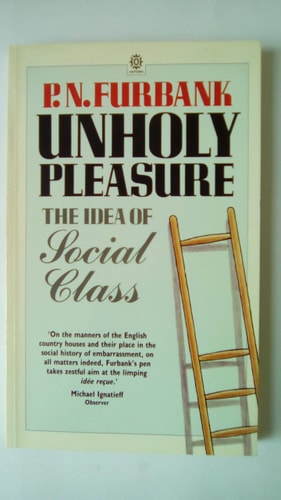
This volume explores how our ideas about social class originated and have developed, focusing on the purpose of using "class" terminology. Furbank discusses what Marx meant by "bourgeois," the validity of historians and sociologists' uses of the term "class," and the motives of those who take "unholy pleasure" in finding class amusing, as well covering more concrete topics such as the master-servant relationship and the popularity of etiquette books. He calls "class" a rhetorical term used as a form of social action, and concludes that it has had its day, with novelists like Dickens, Kafka, and Proust demonstrating how to see through and beyond it.
Menrva's Summary
THE THESIS
This work investigates the origins, utility, and eventual obsolescence of the concept of social class as a rhetorical tool in modern discourse. Philip Nicholas Furbank examines the historical and sociological application of class terminology, arguing that the term functions primarily as a form of social action rather than a precise analytical category. By analyzing the works of Marx and various literary figures, the author posits that the obsession with class distinctions serves specific social motives that have become increasingly irrelevant in contemporary society.
THE SCOPE MAP
What You Will Find
- Analysis of the term 'bourgeois' within Marxist theory
- Examination of the master-servant relationship in historical context
- Critique of the sociological and historical usage of class terminology
- Review of the cultural impact of etiquette books
- Literary analysis of class representation in the works of Dickens, Kafka, and Proust
Scope Limits
- Does not provide a comprehensive economic history of class structures
- Focuses primarily on the rhetorical and conceptual usage of the term rather than empirical demographic data
THE AUTHORITY PERSPECTIVE
Scholars and critics recognize this text as a provocative critique of sociological methodology and linguistic habits. Readers frequently note the intellectual rigor of the prose, which challenges established academic conventions regarding social stratification.
Page Count:
158
Publication Date:
1987-09-17
Publisher:
Oxford University Press
ISBN-10:
0192851470
ISBN-13:
9780192851475
Non-Fiction
Political Theory
Class Studies
Social History
Social Classes
Sociology
Community Tags
Similar Books